Operating heavy commercial vessels, research ships, tug-barge units, or government craft along Florida's west coast demands an entirely different tier of shipyard infrastructure than standard recreational marinas can offer. When structural modifications, extensive drydocking, heavy crane picks, or coded pipe fabrication become necessary, vessel operators need yards equipped with deep-water berths, substantial lifting capacity, and round-the-clock trade support. Gulf Marine Repair in Tampa, FL represents one of the premier heavy industrial maritime shipyards serving the Gulf Coast and eastern seaboard.
Understanding how a commercial-grade yard operates helps vessel managers, marine superintendents, and fleet engineers plan major overhauls without costly scheduling delays. From drydock dimensions to certified welding specifications, evaluating industrial shipyard capabilities ensures your vessel gets back into service safely and on schedule.
What Types of Vessels Require Industrial Shipyard Infrastructure?

Smaller yards frequently cater to recreational yachts and small commercial vessels, but larger working vessels present engineering challenges that require dedicated industrial space. Large ocean-going vessels, articulated tug-barge (ATB) units transporting liquid chemical, petroleum, or dry bulk products, dredges, harbor tugs, and government craft require specialized docking facilities and strict regulatory compliance.
At Gulf Marine Repair in Tampa, FL, the yard's primary focus centers on these demanding vessel categories, including assets for the U.S. Coast Guard, Maritime Administration (MARAD), U.S. Army Corps of Engineers (USACE), and the National Oceanic and Atmospheric Administration (NOAA). These craft involve heavy steel plating, complex hydraulic piping, commercial propulsion systems, and rigorous inspection standards that standard boatyards are simply not built to handle.
How Do Drydocks and Bulkhead Capacity Dictate Project Feasibility?

The primary constraint in any major haul-out or underwater repair project is the physical footprint of the yard. Without adequate bulkhead frontage and multiple drydock options, a facility cannot accommodate simultaneous heavy projects or provide flexible staging for emergency vessel positioning.
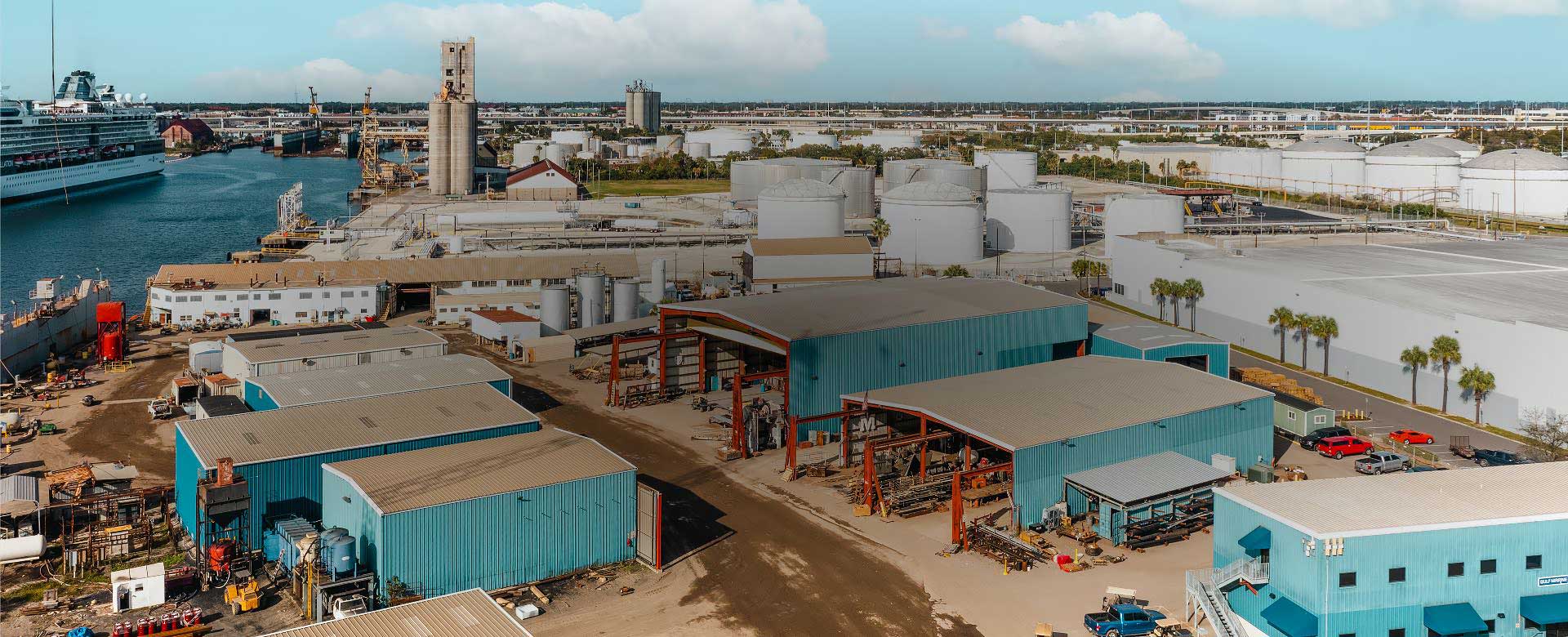
Located on the Ybor Ship Channel with direct deep-water access to the Gulf of Mexico, the 50-acre facility at Gulf Marine Repair features 3,200 linear feet of bulkhead space and four drydocks. This physical capacity allows operators to schedule extensive below-the-waterline work—such as rudder overhauls, shaft pulling, sea chest maintenance, and bottom plating replacement—while staging topside projects along the bulkhead.
- Harbor and positioning assistance: Dedicated yard tugboats handle precise vessel positioning during docking maneuvers, eliminating the delay of contracting third-party tugs for tight dock entries.
- Heavy lift staging: Heavy-duty track cranes positioned throughout the bulkhead and drydock aprons allow seamless removal and reinstallation of machinery, deck equipment, and structural modules.
- Deep-water berthing: Deep channel access ensures loaded or deep-draft vessels can enter the basin without risking grounding or requiring extensive deballasting.
What Fabrication and Specialized Trades Are Essential for Major Marine Overhauls?

When a vessel undergoes structural refits or repowering, relying on fragmented third-party subcontractors often leads to communication breakdowns, schedule slippage, and inconsistent quality control. Comprehensive shipyards house their core industrial trades under one roof to maintain tight oversight.
Roughly 70 percent of the workforce at Gulf Marine Repair consists of certified welders, shipfitters, pipefitters, and fabricators. Their certifications cover critical structural and mechanical processes, including shield metal arc welding, flux core arc welding, and 6GR-certified pipe welding in both carbon steel and stainless steel. The remaining 30 percent comprises precision machinists, crane operators, and marine electricians.
When evaluating trade capabilities for complex structural and systems work, vessel managers should verify whether a shipyard maintains dedicated on-site support shops:
- Dedicated Pipe Shops: Capable of fabricating high-pressure hydraulic lines, sanitary plumbing, ballast lines, and fuel transfer systems to exact tolerances.
- Machine and Fabrication Facilities: On-site equipment to turn custom shafts, bore stern tubes, mill specialized brackets, and prefabricate large structural subassemblies before drydock positioning.
- Surface Preparation and Blasting Facilities: Industrial blasting and protective coating setups designed to meet demanding commercial and military coating specifications for hull and superstructure preservation.
- Electrical Integration: While specialized wiring contractors like those highlighted in the R&R Electrical Enterprises review address marine electrical demands on various vessel classes, having full-time electrical trades on-site ensures swift troubleshooting during complex machinery refits.
How Do Round-the-Clock Operations Impact Downtime and Project Schedules?
In commercial shipping, government operations, and marine construction, vessel downtime translates directly to financial loss or compromised mission readiness. When emergency propulsion failures, hull damage, or unexpected regulatory survey findings occur, waiting for standard weekday business hours is rarely an option.
Continuous shift models and 24-hour emergency response capabilities allow a full-service yard to compress overhaul timelines significantly. Round-the-clock operations ensure that critical path tasks—such as hull welding, curing multi-coat epoxy systems, or completing engine line-boring—proceed without multi-day pauses.
What Should Operators Prepare Before Booking Industrial Yard Space?
Entering an industrial shipyard requires structured planning and compliance documentation well before lines are thrown. Preparing key information in advance streamlines the quoting, scheduling, and onboarding phases.
- Docking Plans and Stability Calculations: Ensure current docking plans, blocking drawings, and displacement figures are ready for yard naval architects and docking masters.
- Regulatory and Classification Scopes: Clearly define whether the work falls under Coast Guard inspection, American Bureau of Shipping (ABS), Lloyd's Register, or other classification society requirements.
- Subcontractor and Visitor Compliance: Industrial yards maintain strict health, safety, and environmental (HSE) protocols. Gulf Marine Repair requires compliant Certificates of Insurance (COI) listing the facility as certificate holder prior to granting contractor or representative access.
- Itemized Work Specifications: Distinguish between mandatory survey requirements and optional cosmetic or upgrade items to help the estimating team build an accurate timeline and resource allocation.
Whether your fleet requires scheduled five-year regulatory drydocking, emergency hull repair, or major vessel conversion, having the right yard partner makes all the difference. For operations along the Gulf Coast and Eastern United States, review your vessel's upcoming survey milestones, compile your docking drawings, and initiate early planning with the shipyard estimating team to secure dock space that fits your operating schedule.
Gulf Marine Repair in Tampa, FL on Boatwork
Featured Pro: Gulf Marine Repair in Tampa, FL. Confirm this location before contacting a business with the same name.
Location
Tampa, FL
View the full Gulf Marine Repair in Tampa, FL marketplace profile on Boatwork


