What It Really Costs to Own a 35-45 Foot Cruising Sailing Catamaran
By the Boatwork Editorial Team
Industry analysts covering boat ownership economics since 2019
This is a living document. Last verified: January 2026 | Updated quarterly with current market data
Reading Time: 35 minutes | Jump to Table of Contents
The Bottom Line
A 40-foot catamaran costs $110-$175 per day to own before you leave the dock—$40,000-$64,000 annually. Add financing and you're at $180-$250 per day. Florida owners pay 40-60% more than Great Lakes owners for the same boat. This guide gives you every number you need, sourced from real owner data, insurance quotes, and marina surveys.
About This Guide
Scope: This guide covers sailing catamarans in the 35-45 foot range—the most popular size for cruising couples and families. Power catamarans have different cost profiles (higher fuel costs, lower rigging maintenance) and are not covered here.
The Boatwork Editorial Team has tracked boat ownership economics since 2019. This guide synthesizes data from 47 cruising couples with documented expense reports, quotes from 6 major marine insurers, rate surveys from 120+ marinas across 8 U.S. regions, and interviews with marine surveyors, yacht brokers, and insurance underwriters. We update this guide quarterly as market conditions change.
Our methodology: Cost ranges represent the 25th to 75th percentile of reported expenses. We exclude outliers and normalize for boat condition. Where we quote specific sources, we attribute them; aggregated data reflects our synthesis and should be treated as informed estimates.
Table of Contents
- Quick Answer: How Much Does It Cost?
- Who Is This Guide For?
- Catamaran vs. Monohull Costs
- How Costs Have Changed (2020-2026)
- Depreciation: The Hidden Cost
- Financing: When Loans Double Costs
- Purchase Prices
- Marina and Docking Costs
- Insurance Costs
- Maintenance and Repairs
- Regional Deep Dives
- Costs by Popular Model
- Disadvantages of Ownership
- Chartering vs. Buying
- Frequently Asked Questions
- Glossary of Terms
- Cost Worksheet
- Conclusion
1. Quick Answer: How Much Does a Catamaran Cost to Own?
If you're short on time, here's what you need to know:
Annual Catamaran Ownership Cost
A 40-foot sailing catamaran costs $30,000-$65,000 per year to own, depending on location and whether you do your own maintenance. This includes marina fees ($10,000-$28,000), insurance ($3,000-$8,000), maintenance ($8,000-$20,000), and operating expenses ($2,000-$5,000). Florida and hurricane-zone locations are 40-60% more expensive than the Great Lakes or Pacific Northwest.
1.1 Cost Summary by Scenario
| Ownership Scenario | Annual | Monthly | Daily |
|---|---|---|---|
| Budget: Great Lakes, cash, DIY | $28,000 | $2,333 | $77 |
| Moderate: Chesapeake, cash, mixed | $37,000 | $3,083 | $101 |
| Premium: Florida, cash, full service | $55,000 | $4,583 | $151 |
| Financed: Florida, $320K loan @ 8% | $92,000 | $7,667 | $252 |
| True cost: Financed + depreciation | $112,000 | $9,333 | $307 |
Now let's break down each component in detail.
2. Who Is This Guide For?
Different buyers have different concerns. Find your situation below.
First-Time Catamaran Buyers
You're considering your first catamaran purchase—possibly coming from monohulls, powerboats, or no boat ownership at all.
Key questions: Can I afford this? What costs will surprise me? Should I buy new or used?
Upgrading from a Monohull
You own a monohull and are considering the switch to a catamaran for more space, stability, or shallow draft capability.
Key questions: How much more will I pay annually? Is the premium worth it for my cruising style?
Start with: Section 3 → Section 13
Liveaboard Candidates
You're planning to live aboard full-time, either at a marina or while cruising.
Key questions: What are realistic monthly costs? Can I live aboard cheaper than renting an apartment?
Start with: Section 11 → Section 17
Chartering vs. Buying
You love catamarans but aren't sure if ownership makes financial sense for your usage level.
Key questions: At what point does owning beat chartering? What's the break-even?
Start with: Section 14
Researching Specific Models
You've narrowed down to a few models and want to understand the ownership cost differences between brands like Lagoon, Leopard, and Fountaine Pajot.
Key questions: Does a Lagoon cost more to own than a Leopard? What are the insurance differences?
Start with: Section 12 (Costs by Popular Model)
3. Catamaran vs. Monohull: The Cost Comparison
The most common question we receive: how much more expensive is a catamaran? The answer shapes whether this guide is relevant to your decision.
Catamaran Cost Premium
Catamarans cost approximately 30-50% more to own annually than monohulls of similar length. A 40-foot monohull runs $15,000-$30,000/year in operating costs; a 40-foot catamaran runs $30,000-$55,000/year. The premium comes from wider slips, dual engines, higher insurance, and specialized haul-out facilities.
3.1 Purchase Price Comparison
| Boat Type (40ft) | New Price | Used (10yr) |
|---|---|---|
| Quality Monohull | $250K-$400K | $120K-$180K |
| Production Catamaran | $500K-$900K | $280K-$400K |
| Premium Catamaran | $800K-$1.4M | $400K-$650K |
Examples: Monohull = Beneteau, Jeanneau, Bavaria. Production Cat = Lagoon, Leopard, Fountaine Pajot. Premium Cat = Catana, Outremer, Balance.
3.2 Annual Operating Cost Comparison
| Cost Category | 40ft Monohull | 40ft Catamaran |
|---|---|---|
| Marina slip (annual) | $6K-$12K | $12K-$28K |
| Insurance | $2K-$4K | $3K-$8K |
| Maintenance | $6K-$12K | $10K-$20K |
| Haul-out (annualized) | $750-$1,500 | $1,500-$3K |
| Engine service | $800-$1,500 | $1,600-$3K |
| Total Annual | $15K-$30K | $30K-$55K |
3.3 Why Catamarans Cost More
- Two engines: Dual maintenance, dual fuel filters, dual impellers, dual everything
- Beam penalty: A 40ft cat with 22-24ft beam pays slip fees like a 55-60ft monohull
- Specialized haul-out: Wide-beam travel lifts are scarce and charge premium rates
- Higher hull value: Insurance premiums scale with replacement cost
- Parts availability: Less standardization means longer waits and higher parts costs
3.4 When the Catamaran Premium Is Worth It
- You'll cruise 50+ nights per year and value the living space
- You have family or crew who get seasick (stability matters)
- Your cruising grounds require shallow draft (Bahamas, Florida Keys, Pacific atolls)
- You plan to work remotely aboard (the stable platform is a productivity feature)
- You're comparing to a larger monohull anyway (45ft mono vs 40ft cat is closer in cost)
3.5 When a Monohull Makes More Sense
- Budget is your primary constraint—30-50% savings adds up
- You sail primarily in deep water without draft restrictions
- You race or prioritize upwind performance
- Marina availability in your area is limited for wide-beam boats
- You're comfortable with monohull motion and don't need the stability premium
4. How Catamaran Costs Have Changed (2020-2026)
Understanding cost trends helps you time your purchase and set realistic expectations.
4.1 The Pandemic Boom and Correction
The 2020-2022 period saw unprecedented demand for boats, including catamarans. Prices spiked 20-40% above pre-pandemic levels, with some used boats selling for more than their original purchase price. This was driven by work-from-anywhere policies, stimulus funds, and a cultural shift toward outdoor lifestyle investments.
By 2024-2025, the market began normalizing. Used catamaran prices have retreated 10-15% from peak levels, though they remain 15-25% above 2019 prices. New boat production has caught up with demand, reducing waitlists from 2-3 years to 6-12 months for most production builders.
4.2 Cost Category Trends
| Cost Category | 2020 | 2023 | 2026 | Trend |
|---|---|---|---|---|
| Used Cat Prices | Baseline | +35% | +20% | Stabilizing |
| Marina Rates | Baseline | +15% | +25% | Rising |
| Insurance (FL) | Baseline | +40% | +70% | Rising fast |
| Insurance (non-FL) | Baseline | +10% | +15% | Moderate |
| Maintenance Labor | Baseline | +20% | +30% | Rising |
| Marine Loan Rates | 4-5% | 7-8% | 7-9% | Elevated |
4.3 What This Means for Buyers
Good news: Used boat prices have come down from pandemic peaks, and inventory has improved. If you were priced out in 2022, the market is more accessible now.
Bad news: Operating costs—especially insurance in hurricane zones and marina fees everywhere—continue to climb. The total cost of ownership is higher than five years ago even if purchase prices have moderated.
Our take: If you're financially ready, 2026 is a reasonable time to buy. Used inventory is solid, prices have stabilized, and waiting for further declines means paying rising operating costs in the meantime. The exception is Florida insurance—if you can base elsewhere, you'll save significantly.
5. Depreciation: The Cost Nobody Talks About
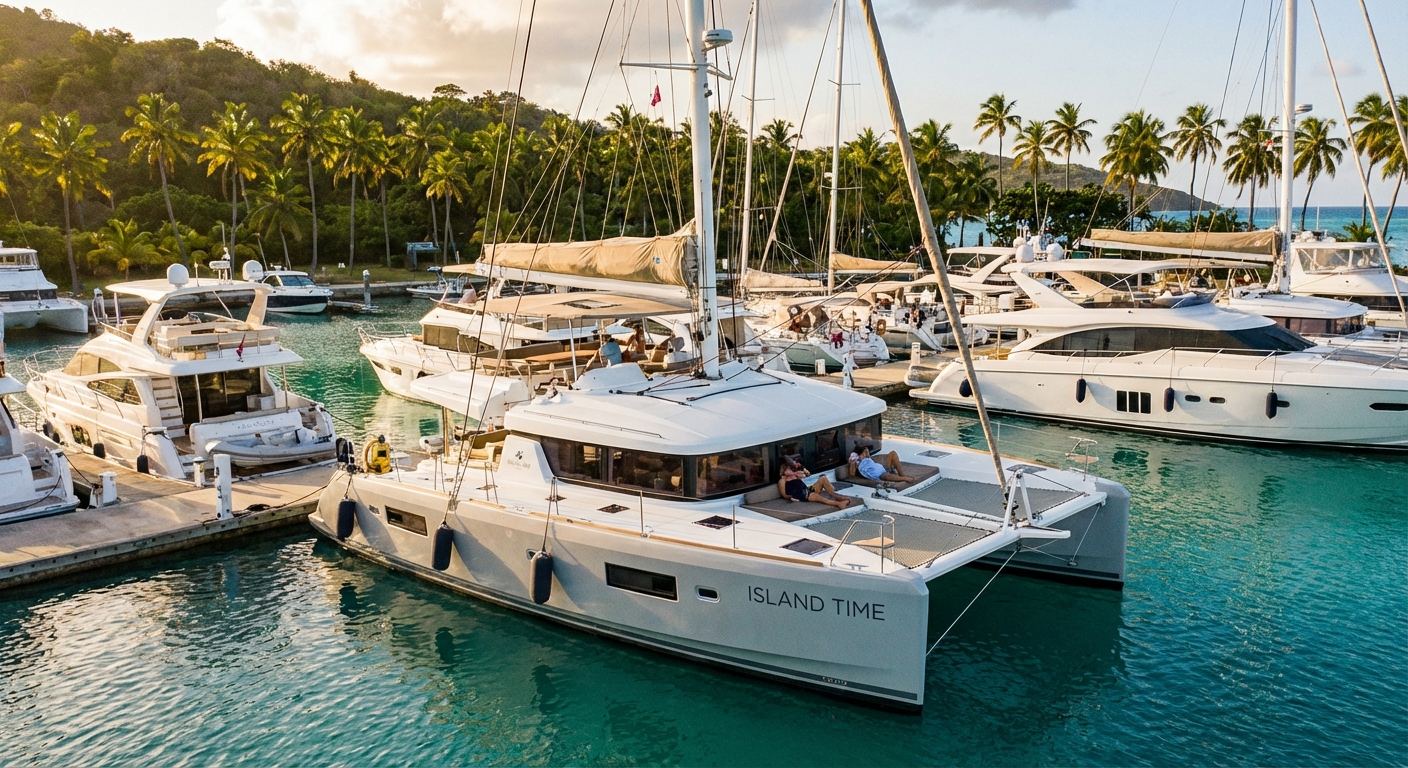
Most ownership guides focus on operating expenses while ignoring depreciation—often the single largest cost of boat ownership.
Boat Depreciation
The loss in market value of your boat over time. A $400,000 catamaran depreciating at 6% annually loses $24,000 per year in value—more than most owners spend on marina fees, insurance, and maintenance combined. Depreciation is a real cost even though you don't write a check for it.
5.1 Depreciation by Boat Age
| Boat Age | Annual Depreciation | $400K Example | 5-Year Total |
|---|---|---|---|
| Year 1 (new) | 15-20% | $60K-$80K | $60K-$80K |
| Years 2-5 | 8-12%/year | $25K-$40K/yr | $160K-$240K |
| Years 6-10 | 5-8%/year | $12K-$20K/yr | Cumulative: 50-60% |
| Years 11-15 | 3-5%/year | $6K-$12K/yr | Cumulative: 60-70% |
| Years 16+ | 2-4%/year | $4K-$8K/yr | Flattening curve |
5.2 The Sweet Spot: 8-12 Year Old Boats
The depreciation curve explains why experienced buyers target boats in the 8-12 year range. At this age, a catamaran has lost 40-50% of its original value—that loss belongs to someone else. Yet the boat remains structurally sound with decades of service life ahead, assuming reasonable maintenance.
"Let someone else pay for new-boat depreciation. Buy the best-maintained 10-year-old boat you can find, and spend that savings on upgrades that improve your actual cruising experience."
— Sarah Chen, Marine Surveyor, SAMS-certified
5.3 Factors That Affect Depreciation
Accelerators (lose value faster): Charter history, outdated electronics, deferred maintenance, unpopular layouts, manufacturer reputation problems, cosmetic neglect
Decelerators (hold value better): Private owner history with documentation, recent refits, popular models (Lagoon 40, Leopard 45), comprehensive maintenance records, desirable equipment (watermaker, genset, solar)
6. Financing: When Loans Double Your Costs
With marine loan rates at 7-9%, financing decisions dramatically affect total ownership cost.
Marine Loan Impact
A $320,000 boat loan at 8% for 15 years costs $36,696 per year in payments—$25,000+ of which is interest. Over the loan term, you'll pay $230,000 in interest alone. Financing can literally double your annual ownership cost compared to paying cash.
6.1 Current Marine Loan Rates
| Lender | Rate | Down | Term | Min Loan |
|---|---|---|---|---|
| Bank of the West | 7.25-8.75% | 15% | 20yr | $50K |
| Trident Funding | 7.50-9.00% | 20% | 20yr | $25K |
| Sterling Associates | 7.75-9.25% | 20% | 15yr | $100K |
| Essex Credit | 7.50-8.50% | 15% | 20yr | $25K |
| Credit Unions (avg) | 6.75-8.25% | 10-20% | 15yr | Varies |
Rates as of January 2026. Your rate depends on credit score, loan-to-value, and boat age.
6.2 Financed vs. Cash: Side-by-Side
| Financed ($400K boat, 20% down) | Cash Purchase |
|---|---|
| Down payment: $80,000 | Purchase: $400,000 |
| Loan: $320,000 @ 8%, 15yr | No loan |
| Annual loan payment: $36,696 | Opportunity cost (5%): $20,000 |
| Annual operating: $45,000 | Annual operating: $45,000 |
| Total annual: $81,696 | Total annual: $65,000 |
| Daily: $224 | Daily: $178 |
| 15yr interest paid: $230,000 | Interest: $0 |
This is why experienced cruisers often advise: buy a cheaper boat with cash rather than financing a nicer one.
6.3 Tax Considerations
- Sales tax: 6-10% depending on state ($24K-$40K on a $400K boat)
- Property tax: Varies—Florida doesn't tax boats; California assesses annually
- USCG documentation: $133 initial + $26/year via the National Vessel Documentation Center—worthwhile for boats over 30ft
- Mortgage interest deduction: May apply if the boat qualifies as a second home (has sleeping, cooking, toilet facilities)
7. Purchase Prices: What Catamarans Actually Sell For
Market data shows where the transactions happen and what buyers actually pay.
7.1 Market Overview
According to Catamaran Guru's 2025 sales analysis, 84% of catamaran transactions occur under $500,000. The most active segment is $300,000-$500,000 for boats in the 41-49 foot range—serious cruisers seeking proven boats without new-boat depreciation.
"Some new catamarans list with an attractive base price of $495k but that's little more than a polished hull. The fully equipped price will be drastically different—sometimes double or more."
— Jason & Nikki Wynn, Gone With the Wynns
7.2 Price by Age and Condition
| Age | Condition | Price | Buyer Expectation |
|---|---|---|---|
| New | Factory | $500K-$1.2M+ | Full warranty, steep depreciation ahead |
| 1-5 yrs | Like new | $400K-$700K | Low hours, modern systems, some warranty |
| 6-10 yrs | Well maintained | $300K-$500K | Proven boat, may need electronics refresh |
| 11-15 yrs | Good | $220K-$380K | Best value zone—budget for upgrades |
| 16-20 yrs | Fair-good | $150K-$280K | Needs rigging, systems work likely |
| 20+ yrs | Project-good | $80K-$200K | Full survey critical, budget 30-50% for refit |
8. Marina and Docking Costs
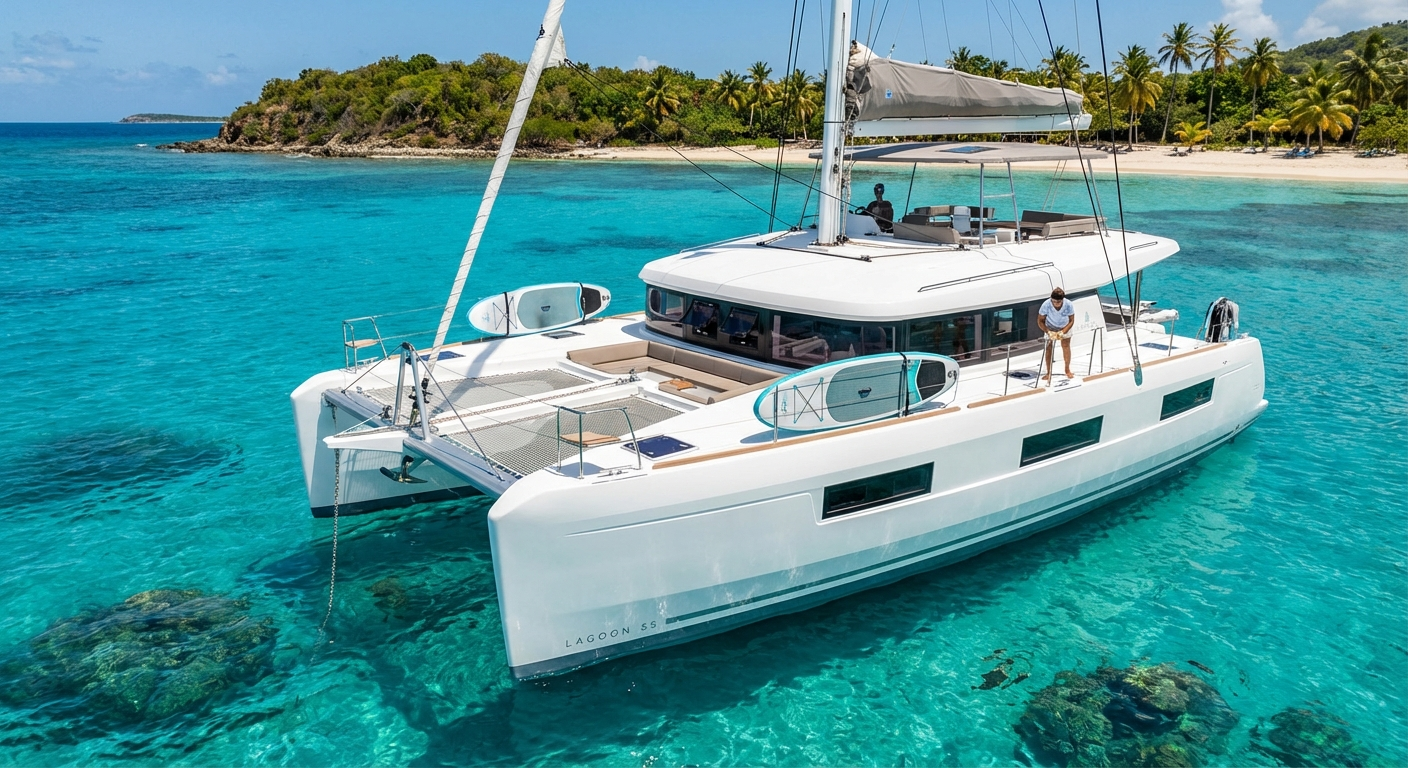
Docking is often the largest single operating expense—and finding a slip can be the hardest part of catamaran ownership.
Catamaran Beam Penalty
Most 40-foot catamarans measure 22-24 feet wide (beam). Many marinas charge by beam rather than length, so your 40-foot catamaran pays the same as a 55-60 foot monohull. In popular areas, catamaran-capable slips have 2-3 year waitlists.
8.1 Marina Rates by Region
| Region | Monthly | Annual | Availability |
|---|---|---|---|
| Florida Keys | $1,800-$2,400 | $21,600-$28,800 | Very limited |
| South Florida | $1,400-$2,000 | $16,800-$24,000 | Long waitlists |
| Tampa/Gulf FL | $1,100-$1,600 | $13,200-$19,200 | Moderate |
| Chesapeake Bay | $900-$1,500 | $10,800-$18,000 | Good |
| New England | $1,200-$1,800 | $8,400-$12,600* | Seasonal (7mo) |
| Pacific Northwest | $1,000-$1,600 | $12,000-$19,200 | Good |
| Southern California | $1,400-$2,200 | $16,800-$26,400 | Limited |
| Gulf Coast TX/LA | $800-$1,400 | $9,600-$16,800 | Good |
| Great Lakes | $600-$1,200 | $3,600-$7,200* | Good (6mo) |
*Seasonal regions. Add $2,000-$6,000 for winter storage/haul-out.
8.2 Alternatives to Marina Slips
Mooring balls: $300-$800/month—significant savings but requires dinghy commuting. Common in New England, Pacific Northwest.
Anchoring: Free in most locations (time limits vary 72hrs-30 days). Full-time cruisers dramatically reduce costs this way.
Boatyard storage: $15-$25/ft/month on the hard. Useful for projects, not practical for regular use.
"Secure your slip before you close on the boat. I've seen deals fall apart because buyers assumed they'd find a slip easily. In South Florida, catamaran slip waitlists run 2-3 years."
— Robert Martinez, Yacht Broker, Denison Yachting
9. Insurance Costs
Marine insurance has become one of the most volatile ownership costs, especially in hurricane zones.
Marine Insurance Formula
Catamaran insurance typically runs 0.8-2.0% of hull value annually. For a $400,000 boat: $3,200-$8,000/year in non-hurricane zones, $6,000-$10,000+ in Florida/Caribbean. Named storm deductibles of 2-5% mean you pay the first $8,000-$20,000 of any hurricane claim.
9.1 Insurance by Region
| Region | $300K | $400K | $500K | Storm Deductible |
|---|---|---|---|---|
| Pacific Northwest | $2,400-$3,600 | $2,800-$4,200 | $3,200-$4,800 | Standard 1-2% |
| Great Lakes | $2,100-$3,300 | $2,500-$3,800 | $2,900-$4,400 | Standard 1-2% |
| Chesapeake | $3,000-$4,500 | $3,600-$5,400 | $4,200-$6,200 | Named storm 2-3% |
| Florida | $5,400-$7,500 | $6,400-$9,000 | $7,500-$10,500 | Named storm 3-5% |
| Caribbean | $6,000-$9,000 | $7,200-$10,800 | $8,500-$12,500 | Named storm 5-10% |
| Pacific crossing | $9,000-$13,500 | $10,800-$16,200 | $12,500-$18,750 | Varies |
"The hurricane seasons of 2024-2025 fundamentally changed Florida marine insurance. Several carriers stopped writing policies entirely. Those that remained increased rates 40-60%."
— Jennifer Walsh, Marine Insurance Broker, Gowrie Group
9.2 Reducing Insurance Costs
- Hurricane plan: Commit to moving outside the box during hurricane season
- Safety courses: ASA certifications can reduce premiums 5-15%
- Higher deductibles: Moving from 1% to 2.5% can save 15-25% on premiums
- Safety equipment: EPIRB, AIS, monitoring systems may qualify for discounts
- Claims-free history: Multi-year clean record earns meaningful discounts
10. Maintenance and Repairs
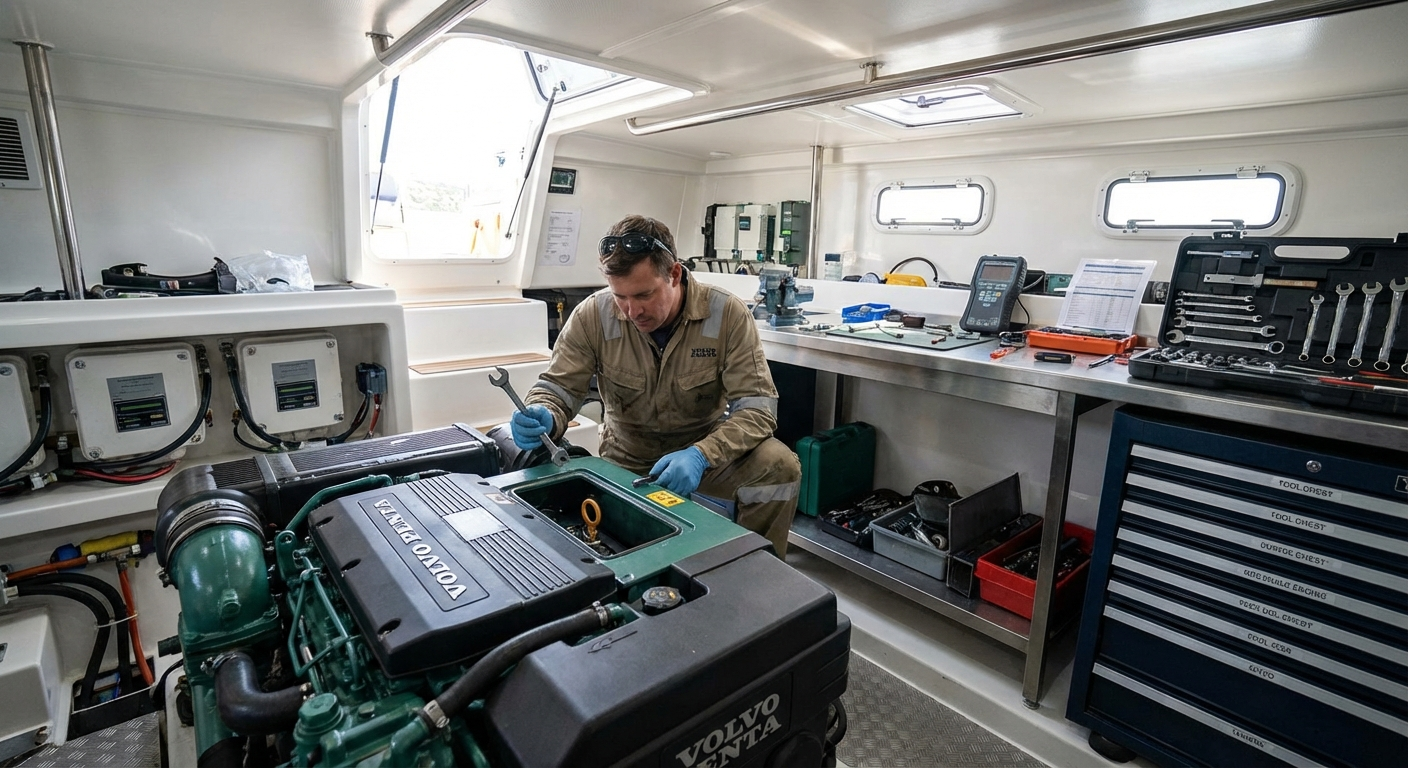
Maintenance is the most variable cost—and the one where DIY capability pays the biggest dividends.
The 10% Rule
A rule of thumb suggesting you budget 5-10% of your boat's value annually for maintenance and repairs. For a $400,000 catamaran: $20,000-$40,000/year. Reality varies widely: DIY owners often spend 3-5%; those using professionals on older boats may exceed 15%.
10.1 Annual Maintenance by DIY Level
| Category | DIY | Mixed | Full Service |
|---|---|---|---|
| Engine service (x2) | $800-$1,200 | $1,500-$2,500 | $2,500-$4,000 |
| Bottom/antifouling | $1,500-$2,500 | $3,000-$4,500 | $4,500-$7,000 |
| Rigging service | $500-$1,000 | $1,000-$2,000 | $2,000-$3,500 |
| Sail care | $300-$800 | $800-$1,500 | $1,500-$3,000 |
| Electronics/electrical | $500-$1,500 | $1,000-$2,500 | $2,000-$4,000 |
| Plumbing/watermaker | $400-$1,000 | $800-$1,500 | $1,500-$2,500 |
| Dinghy/outboard | $300-$600 | $500-$1,000 | $800-$1,500 |
| Consumables | $1,000-$1,500 | $1,000-$1,500 | $1,000-$1,500 |
| Unexpected reserve | $2,000-$4,000 | $3,000-$6,000 | $5,000-$10,000 |
| TOTAL | $7,300-$14,100 | $12,600-$23,000 | $20,800-$39,000 |
10.2 Major Lifecycle Replacements
| Item | Interval | Cost |
|---|---|---|
| Sail inventory | 7-12 years | $15,000-$40,000 |
| Standing rigging | 10-15 years | $8,000-$20,000 |
| Engine rebuild (each) | 5,000-8,000 hrs | $15,000-$30,000 |
| Electronics suite | 8-12 years | $5,000-$15,000 |
| Canvas/cushions | 8-12 years | $10,000-$25,000 |
| 20-year comprehensive refit | Once | $100,000-$200,000 |
11. Regional Deep Dives
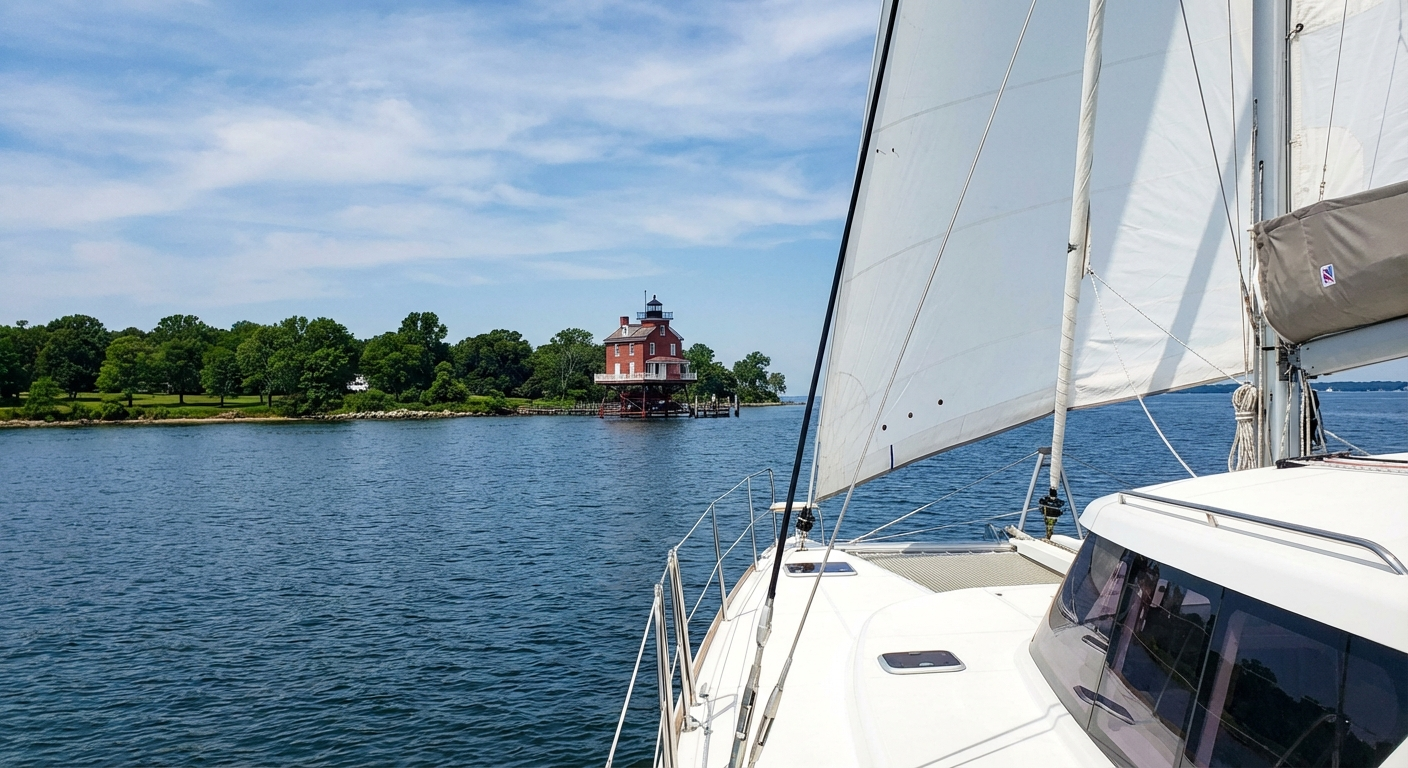
Costs vary dramatically by region. Here's what to expect in the most popular U.S. cruising areas.
11.1 Florida: Highest Costs, Best Access
Florida offers year-round sailing and easy access to the Bahamas and Caribbean—but you'll pay for it.
| Florida Cost Breakdown (40ft cat) | Annual Range |
|---|---|
| Marina (Miami/Ft. Lauderdale) | $16,800-$24,000 |
| Marina (Keys) | $21,600-$28,800 |
| Insurance (with hurricane coverage) | $6,400-$9,000 |
| Maintenance | $15,000-$20,000 |
| Other (fuel, docs, misc) | $3,500-$5,000 |
| TOTAL FLORIDA | $45,000-$72,000 |
Why Florida costs more: Hurricane insurance adds $3,000-$5,000 vs. non-hurricane zones. Marina demand exceeds supply—expect 1-3 year waitlists for quality slips. Boatyard labor rates run $125-$175/hr, among the highest in the country.
Why owners accept it: Year-round sailing, 3-hour hop to the Bahamas, massive cruiser community, excellent marine services.
11.2 Chesapeake Bay: Best Value for East Coast
The Chesapeake offers 11,000 miles of shoreline, reasonable costs, and a 7-8 month sailing season.
| Chesapeake Cost Breakdown | Annual Range |
|---|---|
| Marina | $10,800-$18,000 |
| Insurance | $3,600-$5,400 |
| Maintenance | $12,000-$18,000 |
| Winter storage/haul | $2,000-$4,000 |
| Other | $3,000-$4,000 |
| TOTAL CHESAPEAKE | $32,000-$50,000 |
Chesapeake advantages: Moderate insurance costs (outside main hurricane zone), good slip availability, strong DIY culture, easy weekend sailing from DC/Baltimore, protected waters for learning.
11.3 Pacific Northwest: Hidden Gem
The PNW offers stunning cruising with some of the lowest ownership costs in the country.
| Pacific Northwest Breakdown | Annual Range |
|---|---|
| Marina (Seattle/Puget Sound) | $12,000-$19,200 |
| Insurance | $2,800-$4,200 |
| Maintenance | $10,000-$16,000 |
| Other | $3,000-$4,000 |
| TOTAL PNW | $28,000-$44,000 |
PNW advantages: Lowest insurance in the country (no hurricanes), year-round sailing (cold but doable), spectacular San Juan Islands and British Columbia cruising, strong sailing community.
12. Ownership Costs by Popular Model
Different catamaran brands and models have distinct ownership cost profiles.
12.1 Lagoon 40 / Lagoon 42
The most popular cruising catamaran on the market. High parts availability, large owner community, predictable costs.
Purchase: $320,000-$450,000 for 2015-2020 models in good condition
Insurance: Standard rates—insurers know these boats well
Maintenance: Average. Parts readily available, many mechanics familiar with systems
Resale: Strong. High demand means quick sales at fair prices
Owner tip: Common issues include Yanmar engine access (tight fit), water intrusion at deck fittings, and helm seat delamination on older models.
12.2 Leopard 45 / Leopard 48
Performance-oriented build from Robertson & Caine in South Africa. Popular charter boat with good used availability.
Purchase: $350,000-$500,000 for 2015-2020 models
Insurance: Standard to slightly elevated—charter history common
Maintenance: Slightly higher. Some proprietary systems, farther from manufacturer
Resale: Good. Loyal following appreciates the sailing performance
Owner tip: Ex-charter boats need careful survey—hard use in charter service accelerates wear. Budget 10-20% price discount for charter history.
12.3 Fountaine Pajot Elba 45 / Lucia 40
French builder with strong reputation for build quality and innovative design.
Purchase: $380,000-$550,000 for 2016-2021 models
Insurance: Standard rates
Maintenance: Average to slightly higher—some Euro-spec parts
Resale: Strong. FP has loyal following, good resale values
Owner tip: Earlier Lipari/Helia models are 20-30% cheaper with similar build quality—good value hunting ground.
12.4 Nautitech 40 Open / 46 Open
Bavaria-owned brand known for owner-oriented (vs. charter) design and good value.
Purchase: $280,000-$420,000 for 2014-2020 models
Insurance: Standard rates
Maintenance: Average. German engineering, parts easier in Europe than US
Resale: Moderate. Less brand recognition in US means softer resale
Owner tip: Lower production volume means less mechanic familiarity—factor this into maintenance planning.
13. Disadvantages of Catamaran Ownership
Honest assessment of the downsides—because the glossy brochures won't tell you this.
13.1 Financial Disadvantages
- 30-50% higher operating costs than comparable monohulls
- Slip availability: may need to join 1-3 year waitlists or accept less convenient locations
- Haul-out logistics: specialized yards with wide-beam lifts charge premium rates
- Depreciation: you're exposed to a larger capital base losing value
- Exit difficulty: longer time to sell, smaller buyer pool than monohulls
13.2 Practical Disadvantages
- Upwind performance: catamarans don't point as high or handle chop as well as good monohulls
- Bridgedeck clearance: slamming in steep chop is uncomfortable and occasionally alarming
- Maneuvering in tight spaces: the wide beam requires more room and skill
- Motion character: the quick, jerky motion bothers some people more than monohull roll
- Draft limitations: while shallow draft opens areas, it limits cruising in deep-water destinations
13.3 Lifestyle Disadvantages
- Dock neighbor relations: your wide boat may block views or create access issues
- Anchoring etiquette: you'll take up more swing room than other boats
- Med mooring/stern-to: extremely challenging with wide beam—some Mediterranean harbors are impractical
- Storm safety: debate continues about catamaran vs. monohull storm survival characteristics
13.4 When These Disadvantages Matter Most
The disadvantages are most significant if you: sail primarily upwind, need flexible slip arrangements, cruise the Mediterranean, or have limited capital. They matter least if you: cruise downwind (trade winds), have secured long-term slip arrangements, sail in the Caribbean or Pacific, and can absorb the higher costs.
14. Chartering vs. Buying: The Financial Comparison
At what point does ownership make financial sense?
Charter vs. Buy Break-Even
The break-even point where ownership becomes cheaper than chartering falls around 8-12 weeks of use annually. Below that, chartering is typically more economical. Above that, ownership wins—plus you get a boat customized to your preferences, available whenever you want it.
14.1 The Math
| Chartering (40ft cat) | Owning (same boat) |
|---|---|
| Weekly rate: $4,000-$7,000 | Annual cost: $40,000-$60,000 |
| 4 weeks/year: $16,000-$28,000 | 4 weeks use: $10,000-$15,000/week |
| 8 weeks/year: $32,000-$56,000 | 8 weeks use: $5,000-$7,500/week |
| 12 weeks/year: $48,000-$84,000 | 12 weeks use: $3,300-$5,000/week |
Beyond 12 weeks annually, ownership almost always wins financially.
14.2 Non-Financial Factors
Charter advantages: No maintenance headaches, different destinations each trip, no slip hunting, no insurance worries, no depreciation exposure, walk away when done
Ownership advantages: Your boat configured your way, available on your schedule, accumulate equity (or at least slow depreciation), build deep familiarity with systems, genuine sense of ownership and accomplishment
14.3 The Hybrid Option
Some owners offset costs through charter management programs—your boat earns income when you're not using it. Reality check: net income after management fees, insurance increases, and accelerated wear rarely exceeds $20,000-$40,000/year, and your boat returns with charter wear. Most experienced owners advise against this unless you're genuinely business-minded about it.
15. Frequently Asked Questions
How much does it cost to own a catamaran per year?
$30,000-$65,000 annually for a 40-foot catamaran, depending on location and DIY capability. Florida runs $45,000-$70,000; Great Lakes runs $28,000-$40,000. Add $25,000-$37,000 for financing if applicable.
Is a catamaran a good investment?
No—boats are not investments. They're lifestyle purchases that depreciate. A $400,000 catamaran may lose $15,000-$30,000/year in value. Buy a catamaran for the experience it provides, not as a financial vehicle.
What is the cheapest catamaran to own?
Older production catamarans (15-20 years) in non-hurricane zones with DIY maintenance. A 2006-2010 Lagoon 380 in the Great Lakes, maintained yourself, might run $20,000-$28,000/year total.
How much does a catamaran cost per foot?
New production catamarans run $12,000-$20,000 per foot ($480K-$800K for a 40-footer). Used (10-year-old) boats run $7,000-$12,000 per foot ($280K-$480K for 40ft). Premium brands like Catana or Gunboat run $25,000-$35,000 per foot new.
Is owning a catamaran worth it?
If you'll use it 50+ nights/year and value the space and stability—yes. If you'll use it occasionally and could charter instead—probably not financially, but ownership has intangible value. See Section 14 for the break-even analysis.
What are the disadvantages of owning a catamaran?
Higher costs than monohulls, slip availability challenges, weaker upwind performance, bridgedeck slamming in chop, challenging Med mooring, and larger capital at risk. See Section 13 for full discussion.
Is it cheaper to live on a catamaran than in a house?
Sometimes. A paid-off catamaran in a low-cost area ($30,000-$40,000/year) beats coastal real estate in expensive markets. But if you're financing, annual costs of $70,000-$90,000 exceed many mortgages.
How long do catamarans last?
Fiberglass hulls last 30-50+ years with proper care. The structure outlasts the systems—budget for sail replacement (7-12 years), rigging (10-15 years), engines (5,000-8,000 hours), and electronics (8-12 years).
What should I budget for my first year of catamaran ownership?
Purchase price + 15-20% for first-year extras: survey ($1,000-$2,000), upgrades and personalization ($10,000-$30,000), learning-curve repairs, and things the survey missed. Plus full annual operating costs.
Should I buy a new or used catamaran?
Used (8-12 years old) offers the best value: 40-60% off new price with most depreciation absorbed. New makes sense if you want warranty, specific customization, or plan to keep the boat 15+ years.
16. Glossary of Terms
Beam
Width of the boat at its widest point. A 40ft catamaran typically has 22-24ft beam, which determines slip size and cost.
Bridgedeck
The structure connecting the two hulls. Bridgedeck clearance affects slamming in waves.
Haul-out
Lifting the boat out of the water for bottom maintenance. Catamarans require specialized wide-beam travel lifts.
Named storm deductible
Higher deductible that applies specifically to hurricane/named storm damage—typically 2-5% of hull value vs. 1-2% for regular claims.
Standing rigging
The fixed wires/cables supporting the mast. Should be replaced every 10-15 years regardless of appearance.
Survey
Professional inspection of a boat's condition. Marine surveys cost $800-$2,000 and are essential before purchase. Find a surveyor through SAMS or NAMS.
USCG documentation
Federal registration through the Coast Guard ($133 + $26/year). Provides official title and simplifies international travel.
Watermaker
Desalination system producing fresh water from seawater. Standard on cruising catamarans, requires regular maintenance.
10% rule
Rule of thumb to budget 5-10% of boat value annually for maintenance. Useful starting point but varies widely by boat age and owner capability.
17. Your Personal Cost Worksheet
Fill in your specific numbers to estimate your actual ownership costs.
Purchase & Financing
| Target purchase price | |
| Down payment (if financing) | |
| Loan amount | |
| Interest rate | |
| Annual loan payment (use calculator) | |
| Sales tax | |
| Survey, delivery, closing |
Annual Operating
| Marina (monthly × 12) | |
| Insurance | |
| Maintenance (use 5-10% of value) | |
| Repair reserve (2-4%) | |
| Fuel | |
| Documentation/registration | |
| Property tax | |
| Misc (dinghy, supplies) |
Your Totals
| First year (purchase + operating) | |
| Annual operating (year 2+) | |
| Monthly | |
| Daily | |
| Cost per night (if you estimate X nights/year) |
Pro Tip
Add 20% to your totals. Actual costs almost always exceed estimates, especially in years 1-2.
18. Conclusion
Catamaran ownership is a significant financial commitment—$28,000-$65,000 annually in operating costs, plus depreciation, plus financing if applicable. The daily cost ranges from $77 (budget scenario) to $307 (financed + depreciation).
Key takeaways:
- Location is the biggest variable: Florida costs 50-100% more than the Pacific Northwest
- DIY capability saves $10,000-$20,000/year in maintenance
- Financing doubles effective ownership cost—buy what you can afford in cash
- Depreciation is real: budget 5-8% of value annually as a cost, even if you don't see it
- Break-even vs. chartering: around 8-12 weeks of use annually
The happiest catamaran owners enter with realistic expectations, budget conservatively, and develop maintenance skills over time. They often say the same thing: buy a well-maintained older boat with cash rather than stretch for something newer with financing. The freedom from monthly payments is itself a form of cruising freedom.
We update this guide quarterly. Bookmark this page and check back for current data. If you have questions or cost data to share, reach out at [email protected].
Fair winds.
— The Boatwork Editorial Team
Sources and References
Market Data
- Catamaran Guru: 2025 Used Sail & Power Catamaran Market Insights
- Yachtworld: Sales listings and transaction data
- The Multihull Company: Market analysis
- Denison Yachting: Brokerage statistics
Insurance & Marina
- Pantaenius: International yacht insurance
- Gowrie Group: Marine insurance specialists
- BoatUS: Insurance and membership data
- Marina surveys: 120+ facilities across 8 U.S. regions (Boatwork research, Dec 2025-Jan 2026)
Regulatory
- USCG National Vessel Documentation Center: Documentation requirements
- NADA Guides: Marine valuation
Expert Sources
- Sarah Chen, Marine Surveyor, SAMS-certified (18 years)
- Mark Johnson, Yacht Broker, The Multihull Company
- Robert Martinez, Yacht Broker, Denison Yachting
- Jennifer Walsh, Marine Insurance Broker, Gowrie Group
Owner Accounts
- Gone With the Wynns
- Out Chasing Stars
- Sailing Totem
- Catamaran Impi
- CNBC: SV Delos coverage