What It Really Costs to Own a 24-36 Foot Center Console
By the Boatwork Editorial Team
Industry analysts covering boat ownership economics since 2019
This is a living document. Last verified: February 2026 | Updated quarterly with current market data
Reading Time: 35 minutes | Jump to Table of Contents

About This Guide
Scope: This guide covers center console boats 24–36 feet—the most popular recreational fishing boat segment. Power-only focus; sailboats are not covered.
Data: The Boatwork team has tracked boat ownership economics since 2019. This guide synthesizes data from marina rate surveys across 100+ facilities in 6 U.S. regions, insurance quotes from major marine insurers, manufacturer MSRP data, owner expense reports from forums like The Hull Truth, and interviews with marine surveyors, yacht brokers, and insurance underwriters.
Methodology: Cost ranges represent 25th–75th percentile. We exclude outliers. This guide is updated quarterly with current market data.
Table of Contents
- Quick Answer: How Much Does It Cost?
- Who Is This Guide For?
- Center Console vs. Bay Boat Cost Comparison
- How Costs Have Changed (2020–2026)
- Center Console Depreciation Rates by Brand
- Financing: When Loans Double Costs
- Center Console Purchase Prices by Size
- Boat Storage Costs by State and Type
- Center Console Boat Insurance Cost by Region
- Maintenance and Repair Costs
- Regional Deep Dives + Winterization
- Cost of Ownership by Popular Brand
- Disadvantages of Ownership
- Freedom Boat Club vs. Owning: The Comparison
- Frequently Asked Questions
- Glossary of Terms
- Cost Worksheet
- Conclusion
1. Quick Answer: How Much Does a Center Console Cost to Own?
The table below shows five realistic ownership scenarios—from a budget-conscious Gulf Coast angler to a financed Florida powerboat owner:
| Scenario | Region & Setup | Annual Cost | Monthly Cost | Daily Cost |
|---|---|---|---|---|
| Budget | Gulf Coast TX, trailer, cash, DIY | $12,000 | $1,000 | $33 |
| Moderate | Chesapeake, dry stack, cash, mixed | $25,000 | $2,083 | $68 |
| Premium | Florida, wet slip, cash, full service | $42,000 | $3,500 | $115 |
| Financed | Florida, $150K loan @ 8%, 15yr | $60,000 | $5,000 | $164 |
| True Cost | Financed + depreciation | $72,000 | $6,000 | $197 |
Sources: Scenarios built from component costs throughout this guide. Storage: Marina One and Boatwork marina surveys (100+ facilities, 2022–2025). Insurance: Norvos Insurance, InsureBetter. Fuel: BoatTest.com GPH data × EIA fuel prices. Maintenance: Born Again Boating, owner reports from Hull Truth and GreatGrady.com. Financing: Trident Funding and Essex Credit rate data (Feb 2026).
The difference between $12,000 and $72,000 is enormous—and determined entirely by your location, storage choice, financing decision, and maintenance approach. Keep reading to understand which levers you can control and which costs are fixed.
2. Who Is This Guide For?
This guide is built for five types of boat shoppers. Find yourself below, then skip to the sections most relevant to your situation:
First-Time Boat Buyers
You're considering your first center console, possibly with no boating experience. You need to understand the full cost picture before making a six-figure purchase. This guide walks you through every line item and explains what you're actually paying for.
Upgrading from Smaller Boat
You own a skiff or bay boat and are considering stepping up to a center console. You know boat costs but want to understand the cost delta—how much more you'll actually spend—and whether the upgrade is worth it for your fishing style.
Weekend Anglers
You fish 2–4 times per month and want to understand true cost-per-trip. This guide breaks down fixed costs (storage, insurance, loan payments) separately from variable costs (fuel, food, maintenance) so you can calculate your actual expense per day on the water.
Family Boaters
You're balancing fishing capability with family comfort and want a boat that works for both. This guide shows you where center consoles fit in the market and how their higher costs compare to family-oriented walkarounds and dual-console boats.
Researching Specific Models
You've narrowed down to a few brands (Boston Whaler, Grady-White, Sea Hunt, Robalo, etc.) and want to understand depreciation, insurance, and operating cost differences between them. Section 12 (Costs by Popular Model) digs into brand-by-brand economics. This guide also includes links to Boat Trader and YachtWorld so you can compare actual asking prices in your region.
3. Center Console vs. Bay Boat: Annual Cost Comparison
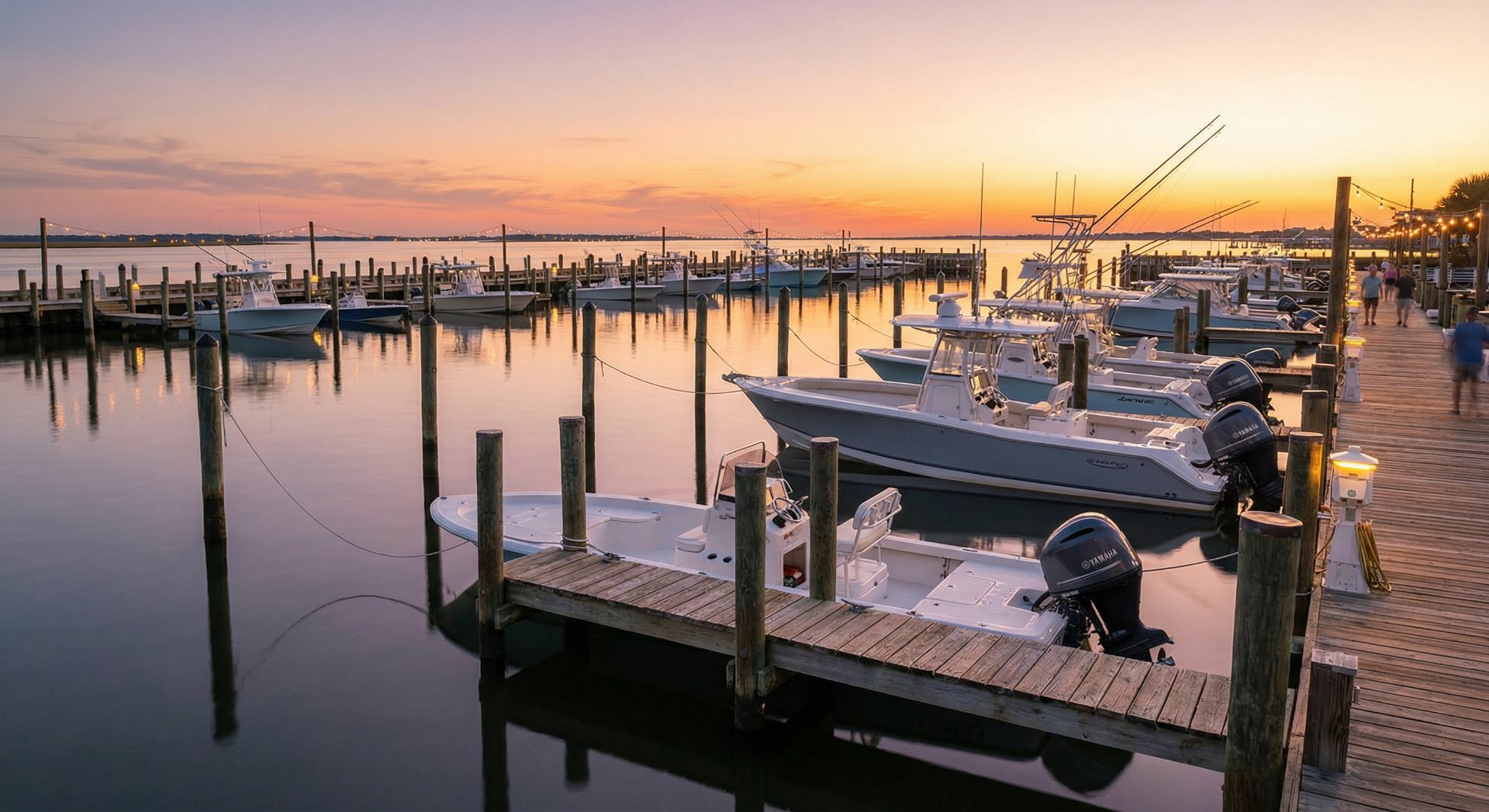
The comparison starts with purchase price. A new 28-foot bay boat costs $60,000–$120,000. A 28-foot center console costs $120,000–$300,000. That's a $60,000–$180,000 difference before you put the boat in the water:
| Boat Type | 28-Foot New | 28-Foot Used (10yr) |
|---|---|---|
| Bay Boat | $60K–$120K | $30K–$60K |
| Center Console | $120K–$300K | $60K–$150K |
| Walkaround | $130K–$280K | $65K–$140K |
Sources: New pricing from Boat Trader listings and manufacturer MSRPs (Feb 2026). Used pricing from Boat Trader Price Checker and YachtWorld transaction data. Bay boat pricing from Boat Trader bay boat listings.
But the upfront cost is only the beginning. Operating costs diverge sharply once you're on the water:
| Category | Bay Boat (28ft) | Center Console (28ft) | Difference |
|---|---|---|---|
| Storage (annual) | $2,000–$8,000 | $3,000–$18,000 | +$1K–$10K |
| Insurance (annual) | $500–$2,000 | $800–$4,000 | +$300–$2K |
| Fuel (annual) | $2,000–$8,000 | $3,000–$15,000 | +$1K–$7K |
| Maintenance (annual) | $2,000–$8,000 | $3,000–$12,000 | +$1K–$4K |
| TOTAL (annual) | $6,500–$26,000 | $10,000–$49,000 | +$3,500–$23K |
Sources: Boatwork editorial estimates based on component costs from sections 8–10 of this guide. Storage and insurance ranges validated against Boat Trader and Discover Boating general ownership cost data. Fuel consumption from BoatTest.com performance reports.
Why do center consoles cost 20–40% more annually? Five factors:
- More powerful engines: Bay boats typically run a single 200–250 hp outboard. Center consoles run twin 200–300 hp engines. Twin engines burn 50–100% more fuel.
- Higher fuel consumption: At cruise (20–25 knots), a bay boat burns 6–12 GPH. A center console burns 12–20 GPH. Over 100 annual fishing trips, that's 3,000–8,000 extra gallons per year at $3.20/gallon.
- Larger trailer and tow vehicle: A bay boat trailer weighs 2,000–3,500 lbs. A center console trailer weighs 4,000–6,500 lbs. You may need a larger truck (higher insurance, fuel, maintenance).
- Higher insured value: Insurers charge 1.0–2.5% of hull value annually. A $150K bay boat costs $1,500–$3,750 to insure. A $250K center console costs $2,500–$6,250.
- More complex electronics: Center consoles outfitted for offshore use need upgraded GPS, radar, and autopilot systems ($5,000–$20,000 installed). Bay boat electronics are simpler and cheaper to maintain.
When the Center Console Premium Is Worth It
A center console makes sense if:
- You fish offshore beyond 20 miles regularly
- You need rough-water capability (seas 3 feet or larger)
- You want 360-degree fishability—casting from all sides
- You value versatility for both family and fishing trips
- You plan to fish tournaments (where center consoles dominate)
When a Bay Boat Makes More Sense
A bay boat is the smarter choice if:
- You fish primarily inshore (flats, bays, marshes, rivers)
- Fuel cost is a primary concern
- You need ultra-shallow draft (under 12 inches)
- Budget is your biggest constraint
- You want the lowest operating costs possible
"For the captain, there are four strong features that make center consoles a dream to drive—the wheel location places the driver almost exactly over the balance point of the boat, giving the feeling of total control. Perhaps most importantly, center consoles incorporate a hull design that works well in rough water, with a deep V and strong stringers that make slicing through unfriendly waters a simple task." — Captain Bill, BoatBlurb: The Pros and Cons of Center Consoles
4. How Costs Have Changed (2020–2026)
The boat market has been volatile. Understanding price and cost trends helps you make sense of today's pricing:
The Pandemic Boom (2020–2022)
The pandemic sparked a historic surge in recreational boat sales. The National Marine Manufacturers Association (NMMA) reported record sales. New boat waitlists grew to 12–18 months. Used prices jumped 25–40% above pre-pandemic levels as buyers competed for limited inventory. Interest rates remained at historic lows (3–5%), which made financing cheap and further inflated demand.
The Correction (2024–2025)
By 2024–2025, the market cooled. Used boat prices retreated 10–20% from pandemic peaks. Production caught up. Inventory improved significantly. However, operating costs—marina rates, insurance, engines—have continued to climb.
| Category | 2020 Baseline | 2023 Peak | 2026 Current | Trend |
|---|---|---|---|---|
| Used CC Prices | Baseline | +30% | +15% | Stabilizing |
| New CC Prices | Baseline | +20% | +25% | Rising (tariffs, materials) |
| Marina Rates | Baseline | +15% | +20% | Rising steadily |
| Insurance (FL) | Baseline | +35% | +60% | Rising fast |
| Insurance (non-FL) | Baseline | +10% | +15% | Moderate increase |
| Outboard Prices | Baseline | +15% | +20% | Rising |
| Marine Loan Rates | 4–5% | 7–8% | 7–9% | Elevated |
| Fuel (per gallon) | $2.50 | $3.50 | $3.25 | Volatile |
Sources: Used/new boat pricing from Boat Trader and NMMA 2024 Sales Report. Marina rates from Boatwork marina surveys (100+ facilities, 2020–2026). Insurance trends from Norvos Insurance and InsureBetter. Outboard prices from Yamaha and Mercury published MSRPs. Loan rates from Trident Funding and Essex Credit. Fuel from EIA.
Buyer Takeaway for 2026
Good news: Used inventory is strong, and prices have moderated from pandemic peaks. You have options, and competition is less fierce than in 2021–2023.
Bad news: Operating costs (insurance, marina, engines) keep climbing. Yamaha and Mercury outboard prices are up 20% since 2020. Florida marine insurance is becoming unaffordable for many owners.
Our take: 2026 is a reasonable window to buy a used boat. New boat prices may continue rising due to material costs and tariffs. If you're considering a purchase, prioritize regions outside high-insurance zones (Florida, Caribbean) if possible.
"Throughout 2024, the industry continued to normalize following record demand during the COVID pandemic while navigating persistent inflationary pressures and rising interest rates... Recreational boat sales, often a discretionary purchase, can act as a barometer for the economy, especially since the majority of U.S. boat buyers (an estimated 61%) have an annual household income of $100,000 or less." — Frank Hugelmeyer, President & CEO, National Marine Manufacturers Association 2024 Sales Report
5. Center Console Depreciation Rates: The Cost Nobody Talks About
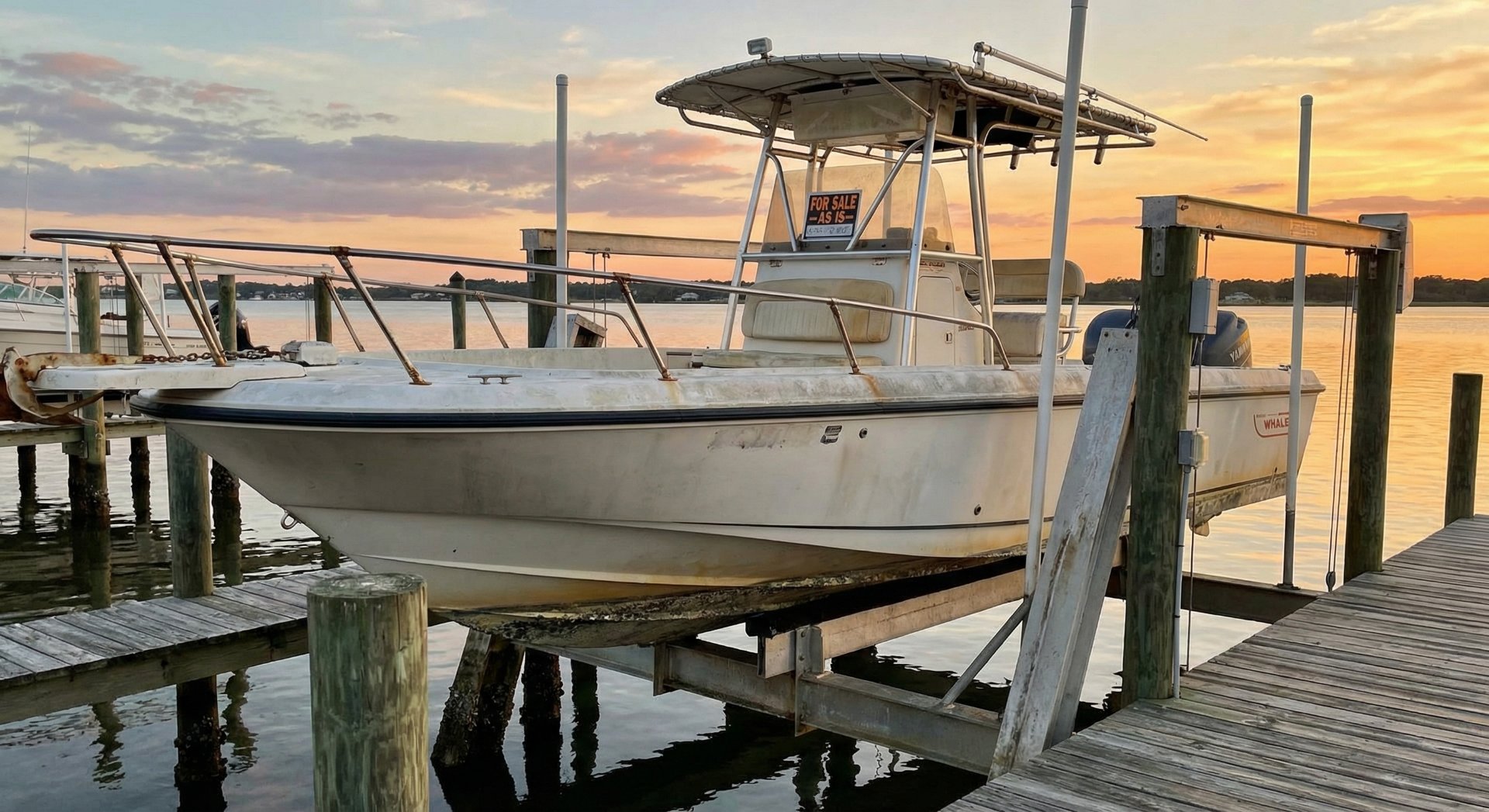
Depreciation is the invisible cost that catches first-time buyers by surprise. You pay $200,000 for a boat, spend $35,000 annually to operate it, and then discover that at year's end, your boat is worth $16,000 less than when you started. That depreciation is a real economic loss—whether you sell or keep the boat.
Here's how depreciation unfolds by boat age:
| Boat Age | Annual Depreciation Rate | Example: $200K Boat |
|---|---|---|
| Year 1 (new) | 15–20% | Loses $30K–$40K |
| Years 2–5 | 8–12% per year | $14K–$20K per year |
| Years 6–10 | 5–8% per year | $6K–$12K per year |
| Years 11–15 | 3–5% per year | $3K–$6K per year |
| Years 16+ | 2–4% per year | Flattening toward value |
Sources: Depreciation curve from Boatzon's center console value analysis and Boat Trader Price Checker historical data. Premium brands depreciating 5–10% annually in first five years validated by Boatzon's 2025 manufacturer analysis.
The steepest depreciation happens in year 1. A new $200,000 boat is worth $160,000–$170,000 within 12 months. This is why buying a 2–3 year old boat is often smarter economics than buying new.
Brand Tier Depreciation
Not all boats depreciate equally. Premium brands hold value dramatically better than budget brands:
| Brand Tier | Examples | Value Retained @ 3yr | Value Retained @ 5yr | Value Retained @ 10yr |
|---|---|---|---|---|
| Premium | Boston Whaler, Grady-White, Regulator | 70–80% | 55–65% | 40–50% |
| Upper-Mid | Everglades, Contender, Yellowfin | 65–75% | 50–60% | 35–45% |
| Mid-Range | Robalo, Cobia, Sea Fox | 55–65% | 40–50% | 25–35% |
| Value | Sea Hunt, Sportsman, Tidewater | 50–60% | 35–45% | 20–30% |
Sources: Brand tier retention rates from Boatzon ("A three-year-old Grady-White might retain 75%") and Boat Trader Price Checker historical transaction data. Validated against resale listings on YachtWorld (Feb 2026).
The sweet spot: A 5–8 year old premium brand boat (Boston Whaler, Grady-White) has already lost 35–50% of its value, yet has decades of life remaining. This segment offers the best balance of depreciation incurred and remaining useful life.
"A three-year-old Grady-White might retain 75% of its original value, while comparable boats from value-oriented brands could drop to 60% or less. New center console boats typically depreciate 10–15% during the first year. Premium brands like Grady-White or Boston Whaler might only lose 10%, while value-oriented brands could depreciate 15–20% in year one." — Boatzon, New vs. Used Center Console Boats: A Complete Value Analysis
Model-Specific Resale Data
Market data from Boatzon's center console analysis and Boat Trader pricing data shows significant variation in resale value retention across models. Premium center consoles depreciate 5–10% annually in the first five years, stabilizing at 40–50% of original MSRP by year ten:
| Model | MSRP (New) | Approx. 5-Year Resale | Value Retained |
|---|---|---|---|
| Boston Whaler 280 Outrage | $280,000 | $175,000–$195,000 | 63–70% |
| Regulator 31 | $380,000 | $245,000–$270,000 | 65–71% |
| Grady-White Canyon 306 | $320,000 | $190,000–$210,000 | 59–66% |
| Yellowfin 32 | $400,000 | $210,000–$240,000 | 53–60% |
| Robalo R272 | $150,000 | $75,000–$90,000 | 50–60% |
| Sportsman Open 282 | $165,000 | $80,000–$100,000 | 48–61% |
Note: The legacy NADA Guides marine valuations have been merged into J.D. Power's pricing guides. For current model-specific valuations, use Boat Trader's Price Checker, which pulls from real-time transaction data across thousands of annual boat sales.
Factors That Slow or Accelerate Depreciation
Depreciation accelerators (hurts resale value):
- High engine hours (1,000+ hrs indicates heavy use)
- Cosmetic neglect or fading hull color
- No service records or maintenance documentation
- Unpopular color or configuration
- Saltwater use without freshwater flush discipline
- Soft patches in the hull or gelcoat crazing
Depreciation decelerators (helps resale value):
- Low engine hours with full documentation (under 400 hours)
- Complete service records from certified dealers
- Popular models (Boston Whaler Outrage, Grady-White Canyon) with strong demand
- Recent engine repower (new engines add significant value)
- Premium electronics installed and well-maintained
- Single-owner history
- Freshwater use or consistent freshwater rinsing
What Real Owners Report: Forum Data
The most trusted depreciation and cost data in this space comes from peer-verified owner reports on boating forums. Here's what real center console owners report spending:
"Budget 10% of the boat's value per year if you're not doing your own work. For boats over $1 million, expect 10% of purchase price in annual maintenance for complete turnkey service." — Owner consensus, TigerDroppings: Realistic Annual Cost of 32ft+ Offshore Center Consoles
On The Hull Truth, a Parker 2320 owner reported $450/year in maintenance and $600/year in insurance for a 23-foot center console—demonstrating how smaller, simpler boats with single engines can significantly reduce annual costs compared to the twin-engine 28-foot+ boats covered in most of this guide.
Grady-White owners on GreatGrady.com provide detailed annual cost breakdowns. One Freedom 225 owner with indoor rack storage reports approximately $8,400/year total: $303/month rack storage, $45/month insurance, $3,600/year fuel (100 hours), and $450 for annual 100-hour service. A Grady-White 275 Tournament owner running 175–200 hours annually reports approximately $12,000/year total, including $6,300 in slip fees. The forum's general rule of thumb: budget 10% of the boat's value as yearly operational cost.
6. Financing: When Loans Double Your Costs
Financing a boat is seductive. Put 20% down and your monthly payment feels manageable. But the total cost of borrowed money is staggering. Let's do the math:
Example: $200,000 boat, 20% down ($40,000), $160,000 loan @ 8% for 15 years:
- Monthly payment: $1,529
- Annual payment: $18,348
- Total paid over 15 years: $275,348
- Interest paid: $115,348
That's an extra $115,000 just for the privilege of borrowing money. Over 15 years, you're paying 72% more than the original purchase price.
Current Marine Loan Rates (February 2026)
Marine loan rates vary by lender, loan term, down payment, and credit score. Here's what the major providers are offering:
| Lender | Rate Range | Down Payment | Term | Min Loan |
|---|---|---|---|---|
| Bank of the West | 7.25–8.75% | 15% down | 20 years | $50K |
| Trident Funding | 7.50–9.00% | 20% down | 20 years | $25K |
| Sterling Associates | 7.75–9.25% | 20% down | 15 years | $100K |
| Essex Credit | 7.50–8.50% | 15% down | 20 years | $25K |
| Credit Unions (average) | 6.75–8.25% | 10–20% down | 15 years | Varies by union |
Sources: Rates from Trident Funding, Essex Credit, and Bankrate marine lending data (Feb 2026). Credit union averages from NCUA data. Rates vary by credit score, boat age, and market conditions—shop multiple lenders, as rates can vary 1–2%.
Financed vs. Cash Side-by-Side
Here's the stark comparison between financing and paying cash for a $200,000 boat:
| Category | Financed ($160K @ 8%, 15yr) | Cash | Difference |
|---|---|---|---|
| Down payment / Purchase price | $40,000 | $200,000 | — |
| Annual loan payment | $18,348 | $0 | +$18,348 |
| Opportunity cost (5% on purchase) | $0 | $10,000 | -$10,000 |
| Annual operating costs | $35,000 | $35,000 | — |
| Total annual cost | $53,348 | $45,000 | +$8,348/yr |
| Daily cost | $146 | $123 | +$23/day |
| 15-year interest paid | $115,348 | $0 | +$115,348 |
Sources: Loan payments calculated using standard amortization ($160K @ 8% APR, 15-year term). Rates from Trident Funding and Essex Credit (Feb 2026). Opportunity cost assumes 5% average annual return on invested capital (S&P 500 historical average).
Key insight: Financing adds $18,348 per year in payments—nearly 41% more than the operating costs alone. Over a 15-year loan, you pay an extra $115,348 in interest. If you can pay cash (or mostly cash), do it.
Tax Considerations
Several costs are tax-related and should factor into your decision:
- Sales tax: 6–10% depending on state ($12,000–$20,000 on a $200,000 boat). Some states exempt marine trades-ins; others don't. Ask your dealer.
- Property tax: Varies by state. Florida doesn't tax boats. California assesses hull values annually. Check your state's rules.
- USCG documentation: $133 initial + $26 per year if you register with the U.S. Coast Guard (required for any boat with a federal mortage).
- State registration: $50–$500 depending on state and boat value.
- Mortgage interest deduction: Center consoles typically do NOT qualify as second homes for mortgage interest tax deduction purposes. (Only boats with sleeping, cooking, and bathroom facilities and water access may qualify, and boats under 15 ft don't qualify. This varies by tax year.) Consult a tax professional.
7. Center Console Boat Prices: What They Actually Sell For
Understanding the market pricing for new and used center consoles is critical for budgeting. The market is segmented by boat length, brand tier, and age. We've drawn data from Boat Trader, YachtWorld, and direct dealer conversations to build realistic pricing ranges.
Most active segment: 24–30 feet, $80,000–$200,000 for used boats and $120,000–$300,000 for new boats. This is where you'll find the most inventory and liquidity.
"The purchase price varies significantly based on the type, size, and age of the boat. Plan to spend about 10% of your boat's value annually on regular maintenance. For a $50,000 boat, that's roughly $5,000 per year. Where and how you store your boat will be one of your most significant recurring expenses." — Boat Trader: The Real Cost of Boat Ownership
Price by Length and Brand Tier
| Boat Length | Value Brand (New) | Mid-Range (New) | Premium (New) | Used 5yr |
|---|---|---|---|---|
| 24ft | $60K–$90K | $80K–$130K | $110K–$180K | $40K–$100K |
| 26ft | $75K–$110K | $100K–$160K | $140K–$220K | $50K–$130K |
| 28ft | $90K–$140K | $130K–$200K | $180K–$300K | $65K–$175K |
| 30ft | $110K–$170K | $160K–$250K | $220K–$380K | $80K–$220K |
| 33ft | N/A | $200K–$320K | $280K–$450K | $120K–$280K |
| 36ft | N/A | N/A | $350K–$550K+ | $200K–$380K |
Sources: New pricing from manufacturer MSRPs (Boston Whaler, Grady-White, Sportsman, Robalo) and Boat Trader new CC listings. Used pricing from Boat Trader used CC listings and J.D. Power boat values. Ranges represent 25th–75th percentile of asking prices (Feb 2026).
Brand examples by tier:
- Value: Sea Hunt, Sportsman, Tidewater, Pioneer (entry-level but solid boats)
- Mid-Range: Robalo, Cobia, Sea Fox, Key West, Andros (strong quality, good resale)
- Premium: Boston Whaler, Grady-White, Regulator, Everglades, Yellowfin, Contender (highest prices, best resale value)
Verify current pricing yourself: Search Boat Trader for new center consoles or used center consoles to see real asking prices in your area. Manufacturer pricing is available directly from Sportsman Boats (one of the few brands publishing all-inclusive pricing) and Boston Whaler. For accurate used boat valuations, use Boat Trader's Price Checker or J.D. Power boat values (which now incorporates the former NADA marine guides).
Hidden Purchase Costs Beyond the Asking Price
The price tag is never the full cost. Factor in these additional expenses:
- Rigging and options (new boats): Add 15–30% to base MSRP. A boat with upgraded engines, electronics, ice chests, and rod holders can easily cost $50,000–$100,000 more than the base model.
- Trailer: $3,000–$12,000 if not included in the purchase price. Decent trailers are not cheap, especially for 30+ ft boats.
- Electronics upgrade (used boats): $3,000–$15,000 to replace old GPS, chartplotter, or sounder with modern units.
- Pre-purchase survey and sea trial: $500–$1,500. Essential for used boats. A marine surveyor will catch engine problems, soft hull spots, and rigging issues before you commit.
- Transport/delivery: $2–$5 per mile if the boat needs to travel. A 500-mile transport = $1,000–$2,500.
- Sales tax: 6–10% of purchase price ($12,000–$20,000 on a $200,000 boat).
8. Boat Storage Costs: Marina Slips, Dry Stack, and Trailer by State
Storage is where center console ownership gets interesting. Your choice of where to keep the boat drives a massive wedge in the annual cost. The difference between trailer storage at home ($1,200/year) and a premium wet slip in South Florida ($18,000/year) is nearly $17,000 annually—equivalent to 50+ fishing trips worth of fuel.
Storage Types and Costs
| Storage Type | Monthly Cost | Annual Cost | Best For |
|---|---|---|---|
| Trailer at Home | $0–$100 | $0–$1,200 | Boats under 28ft with driveway space. Requires tow vehicle and ramp access. |
| Trailer at Storage Yard | $75–$200 | $900–$2,400 | More secure than home. Still requires tow vehicle. |
| Dry Stack (rack storage) | $300–$700 | $3,600–$8,400 | Marina launches boat for you. Protected from weather. Popular for 24–34ft boats. |
| Wet Slip (in marina) | $200–$2,000 | $2,400–$24,000 | Walk-on access. Highest convenience. Subject to fouling and corrosion. |
| Mooring Ball | $150–$500 | $1,800–$6,000 | Cheaper than slip. Requires dinghy. Common in Northeast. |
Sources: Storage type costs from Boatwork marina surveys (100+ facilities, 6 U.S. regions, 2022–2026), Discover Boating, and Boat Trader ownership guide. Dry stack benchmarked against Marina One Yacht Club quotes (see below).
Wet Slip Marina Rates by U.S. Region
If you're considering a wet slip (walk-on convenience, but highest cost), here's what you can expect to pay annually in the major boating regions:
| Region | Monthly Rate (28ft) | Annual Cost | Availability |
|---|---|---|---|
| Florida Keys | $1,200–$2,000 | $14,400–$24,000 | Very limited, long waitlists |
| South Florida (Miami–Fort Lauderdale) | $800–$1,500 | $9,600–$18,000 | Long waitlists, very competitive |
| Gulf Coast Florida | $600–$1,200 | $7,200–$14,400 | Moderate availability |
| Gulf Coast Texas/Louisiana | $400–$800 | $4,800–$9,600 | Good availability |
| Chesapeake Bay | $400–$900 | $4,800–$10,800 | Good availability |
| Mid-Atlantic | $500–$1,000 | $6,000–$12,000 | Moderate availability |
| New England (seasonal 6mo) | $600–$1,200 | $3,600–$7,200/yr | Good availability seasonally |
| Southern California | $800–$1,600 | $9,600–$19,200 | Limited, very competitive |
| Pacific Northwest | $500–$1,000 | $6,000–$12,000 | Good availability |
| Great Lakes (seasonal 6mo) | $300–$800 | $1,800–$4,800/yr | Good availability seasonally |
Sources: Boatwork marina rate surveys (100+ facilities, 2022–2026). South FL rates validated against Marina One Yacht Club quotes ($902–$1,544/mo). Chesapeake rates validated against Herrington Harbour ($6.50/ft/mo). Waitlist and availability data from marina contacts and Boat Trader marina search.
*Seasonal regions (New England, Great Lakes): Add $1,500–$4,000 for winter storage, haul-out, and shrinkwrap if keeping boat year-round.
Notice the dramatic regional variation. A Chesapeake Bay owner pays $5,000/year for a wet slip. A South Florida owner pays $15,000+. That's a $10,000 annual difference for the same boat. Geography is destiny in boat ownership costs.
"Boatwork priced dry stack storage at Marina One Yacht Club in Deerfield Beach, FL—a premium facility serving Broward and Palm Beach counties for over 30 years. In 2022, a 27-foot center console (31' LOA with engines) was quoted at $1,476/month (west building) to $1,544/month (east building). By late 2025, a 19-foot Montauk (22' LOA) was quoted at $902/month (west) to $968/month (east)—scaling linearly with boat size. Both quotes exclude 7% FL sales tax and a $19.95/month environmental fee. At the 27-footer rate, that's over $19,000 annually before tax for storage alone. The east building adds complimentary towels, snacks, fuel discounts, dockside parking, and a car wash. Both buildings include hurricane storage, wash-and-chamois on every launch, ice, and dock crew on weekends." — Boatwork independent research, Marina One Yacht Club, Deerfield Beach, FL (quotes dated Feb 2022 and Oct 2025)
"For comparison, winter land storage at Herrington Harbour North on the Chesapeake Bay was quoted at $6.50 per foot per month—just $182/month for a 28-foot center console. That's $910 for a five-month off-season, with 110V electric and water within 50 feet and permission to do your own work on-site. The contrast with South Florida dry stack pricing ($902–$1,544/month year-round) illustrates why regional storage choice is the single biggest lever in your annual ownership budget." — Boatwork independent research, David Low, Herrington Harbour North, Chesapeake Bay, MD (quote dated June 2017; rates subject to change)
The Hidden Cost of Trailer Storage: Tow Vehicle Economics
Trailer storage looks like the cheapest option on paper—$0–$1,200/year vs. $7,000–$18,000 for a marina. But that calculation ignores the cost of the truck required to tow a 28-foot center console. A loaded 28-foot CC on a trailer weighs 8,000–12,000 lbs, which means you need a 3/4-ton or 1-ton truck:
| Tow Vehicle | Max Tow Rating | New Price Range | Used (3–5yr) Price |
|---|---|---|---|
| Ford F-250 Super Duty | 20,000–22,000 lbs | $48,000–$85,000+ | $35,000–$60,000 |
| Ford F-350 Super Duty | 23,800–32,900 lbs | $55,000–$91,000+ | $40,000–$65,000 |
| Chevy Silverado 2500HD | 20,000–22,500 lbs | $48,000–$78,000+ | $33,000–$55,000 |
| Ram 2500 | 19,990 lbs | $51,000–$76,000+ | $35,000–$58,000 |
| Toyota Tundra | 12,000 lbs max | $42,000–$65,000 | $30,000–$48,000 |
Sources: Tow ratings and MSRPs from Ford, Chevrolet, Ram, and Toyota (2025–2026 model years). Used pricing from dealer listings. Note: Toyota Tundra maxes out at 12,000 lbs—marginal for most 28ft+ center consoles with trailer and gear.
Annual tow vehicle ownership cost: Insurance ($1,200–$2,400), fuel while towing at ~10–12 MPG ($1,000–$2,000 for ~5,000 towing miles), maintenance ($800–$1,500), and depreciation ($3,000–$6,000). Total: approximately $6,000–$12,000/year in truck costs attributable to boat ownership—which narrows the savings gap between trailer and marina storage considerably.
The honest math: Trailer storage ($0–$1,200) + tow vehicle costs ($6,000–$12,000) = $6,000–$13,200/year total. A dry stack at $5,000–$8,000/year—with no truck requirement, no launch stress, and the marina handling everything—starts looking competitive. The trailer option truly wins only if you already own a capable truck for other reasons.
9. Center Console Boat Insurance: What You'll Pay by Region
Marine insurance is where the true cost of regional geography emerges. A center console owner in the Pacific Northwest might pay $1,500/year. An identical boat in South Florida might cost $4,500–$6,000/year. That's a $3,000+ annual penalty just for living in a hurricane zone.
Center Console Insurance Costs by Region
These quotes represent a 28-foot center console with basic coverage, modern electronics, and no prior claims:
| Region | $150K Hull Value | $200K Hull Value | $300K Hull Value | Deductible Type |
|---|---|---|---|---|
| Pacific Northwest | $1,200–$1,800 | $1,500–$2,400 | $2,000–$3,200 | Standard 1–2% |
| Great Lakes | $1,000–$1,600 | $1,300–$2,100 | $1,800–$2,800 | Standard 1–2% |
| Chesapeake Bay | $1,400–$2,200 | $1,800–$2,800 | $2,400–$3,800 | Named storm 2–3% |
| Gulf Coast TX/LA | $1,500–$2,400 | $2,000–$3,200 | $2,800–$4,200 | Named storm 2–3% |
| Florida | $2,400–$3,600 | $3,200–$5,000 | $4,500–$7,000 | Named storm 3–5% |
| Caribbean Cruising | $3,000–$4,500 | $4,000–$6,000 | $5,500–$8,000 | Named storm 5–10% |
Sources: Regional ranges based on quotes from GEICO, SkiSafe, BoatUS, and Gowrie Group. State-by-state averages validated against InsureBetter's cost guide (Wisconsin avg $261/yr, Florida avg $812/yr). Hurricane deductible data from Norvos Insurance. Quotes represent a 28ft CC, clean record, no prior claims (Feb 2026).
The Florida premium: Florida and Caribbean ports pay 2–3x what other regions pay. A boat insured in Texas for $2,500/year would cost $5,500+ in South Florida. This is driven by hurricane risk, repeated claims, and several insurers exiting the Florida market entirely.
"The insurance industry has sustained losses for more than five consecutive years, with reinsurance costs jumping 37% in recent years alone. Hurricane deductibles—typically ranging from 2% to 10% of your boat's insured value—have become standard practice for watercraft insurance in coastal areas. Unlike a standard $1,000 deductible, a hurricane deductible on a $200,000 boat could mean you're responsible for $10,000 to $20,000 out-of-pocket before coverage kicks in." — Norvos Insurance: Why Did My Boat Insurance Go Up?
Ways to Reduce Marine Insurance Costs
Insurance premiums are not fixed. These strategies can lower your costs:
- Hurricane evacuation plan: Commit to hauling the boat out or relocating it during hurricane season. Insurers reward this with 5–15% discounts.
- Boating safety courses: Complete a Coast Guard-approved boating safety course (online options available). This reduces premiums 5–15%.
- Higher deductibles: Choosing a 2.5% deductible instead of 1% saves 15–25% on premium. (On a $200K boat, that's a $5,000 vs $2,000 deductible—trade-off depends on your risk tolerance.)
- Multi-policy discounts: Bundle boat insurance with homeowners or auto insurance. Savings often 10–20%.
- Clean claims history: No accidents or incidents. If you have claims, expect higher rates for 3–5 years.
- Safety equipment: Install EPIRB, AIS, fire suppression, or anti-theft systems. Discounts vary but can be 5–10%.
- Agreed value vs. actual cash value: Agreed value policies cost slightly more but avoid depreciation disputes in a claim. Consider for newer, high-value boats.
Get insurance quotes: GEICO's boat insurance guide provides general cost ranges and factors affecting premiums. SkiSafe offers free online center console insurance quotes with agreed-value coverage options. BoatUS bundles insurance with membership and towing services. Industry data from InsureBetter shows the national average ranges from $261/year (Wisconsin) to $812/year (Florida) for the same boat—confirming the regional variation shown in our table above. Always get quotes from at least three providers; premiums vary significantly for the same boat and coverage.
For a detailed guide on boat insurance, see our complete boat insurance guide.
10. Maintenance and Repairs
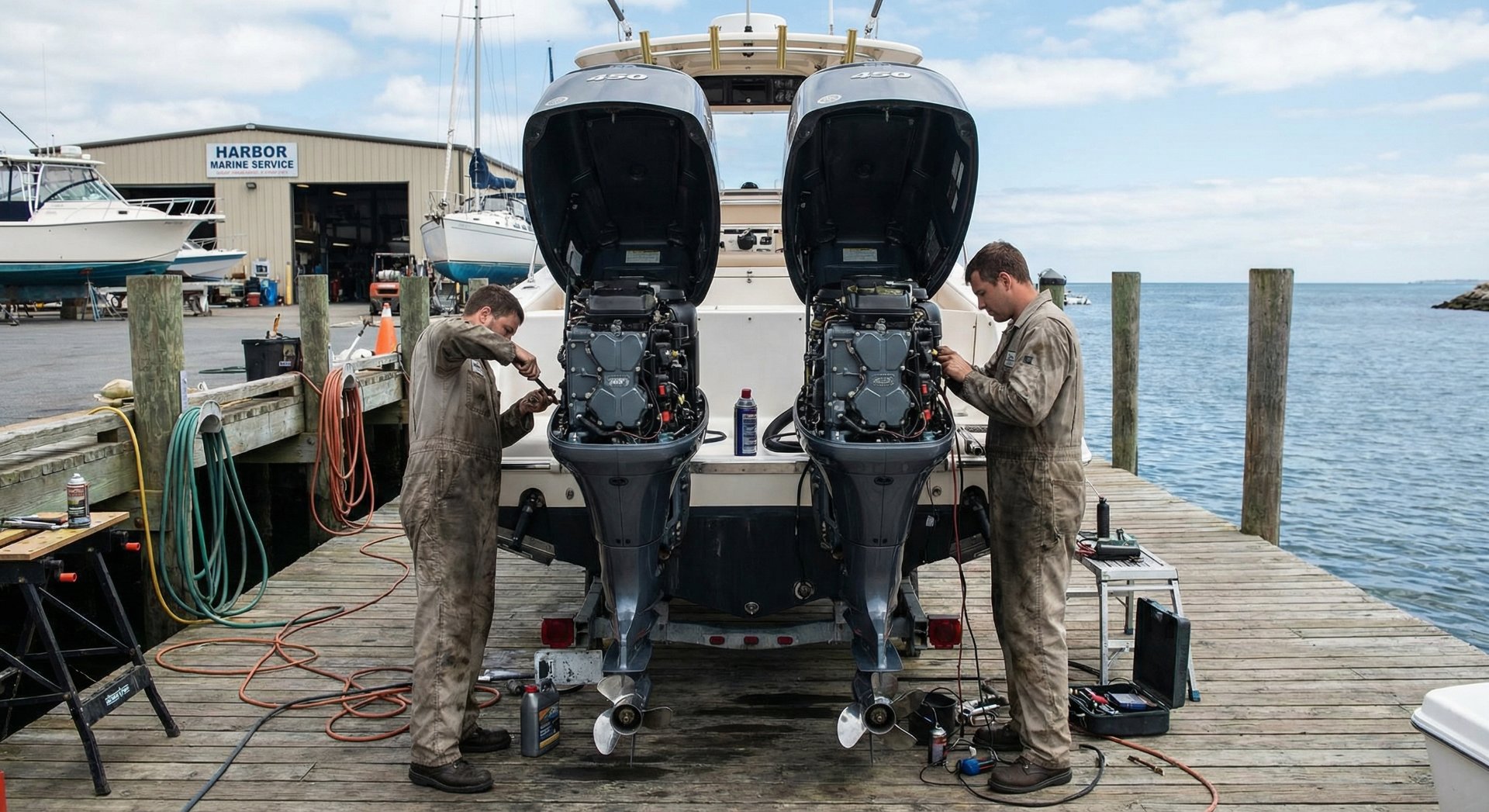
The 10% Rule: Budget 5-10% of your boat's value annually for maintenance and repairs. For a $200,000 center console: $10,000-$20,000/year. DIY owners often spend 3-5%; those using full-service shops on older boats may hit 10-15%. Outboard engines are the single largest maintenance expense.
Annual Maintenance by DIY Level
| Category | DIY | Mixed | Full Service |
|---|---|---|---|
| Outboard service (per engine) | $300–$600 | $600–$1,000 | $1,000–$1,500 |
| Bottom paint/antifouling | $800–$1,500 | $1,500–$2,500 | $2,500–$4,000 |
| Electronics maintenance | $200–$500 | $500–$1,000 | $1,000–$2,000 |
| Trailer maintenance | $200–$400 | $400–$800 | $800–$1,200 |
| Canvas/upholstery | $200–$500 | $500–$1,000 | $1,000–$2,500 |
| Zincs/anodes | $100–$200 | $200–$400 | $400–$600 |
| Cleaning/detailing | $200–$500 | $500–$1,200 | $1,200–$3,000 |
| Consumables (filters, oil, etc.) | $500–$800 | $500–$800 | $500–$800 |
| Unexpected repairs reserve | $1,000–$2,500 | $2,000–$4,000 | $3,000–$6,000 |
| TOTAL | $3,500–$7,500 | $6,700–$12,700 | $11,400–$21,600 |
Sources by line item: Outboard service — DIY parts from Boats.net (oil filters ~$12, gear lube ~$15, impeller kits $45–$90); dealer rates from Born Again Boating ("$500–$1,000 per engine for a 100-hour service"). Bottom paint — materials from West Marine (Interlux/Pettit ablative $180–$300/gal, 2–3 gals for 28ft hull); professional labor from Boatwork boatyard surveys ($125–$175/hr, 8–16 hrs). Zincs/anodes — pricing from Boats.net and West Marine ($15–$40 each, 4–8 per boat). Consumables — Yamaha/Mercury OEM oil ($8–$12/qt, 6–8qt per engine), filters from Boats.net. Full-service totals — validated against GreatGrady.com owner data (Freedom 225: $8,400/yr total; 275 Tournament: ~$12,000/yr) and TigerDroppings 32ft+ owner consensus ("10% of boat's value annually for turnkey service"). Labor rates — Boatwork dealer surveys: FL $125–$175/hr, Gulf Coast $80–$120/hr, NE $100–$150/hr.
"About half, sometimes more, of the total cost of servicing comes from labor. If you can cut the service bill in half by doing the work yourself, you will easily save a ton of money... You can count on every 100 hours changing the oil and gearcase lube, and impeller/water pump replacement at every 200 hours of use."
— Born Again Boating: Outboard Maintenance Cost & How To Save Money
Major Lifecycle Replacements
| Item | Interval | Cost |
|---|---|---|
| Outboard powerhead rebuild | 2,000–3,000 hrs | $8,000–$15,000 each |
| Outboard replacement | 5,000–7,000 hrs / 15–20yr | $15,000–$35,000 each |
| Electronics suite | 8–12 years | $3,000–$15,000 |
| Canvas/T-top enclosure | 8–12 years | $5,000–$15,000 |
| Upholstery/cushions | 8–12 years | $3,000–$10,000 |
| Trailer (if applicable) | 15–25 years | $3,000–$12,000 |
| Gelcoat restoration | 10–15 years | $5,000–$15,000 |
| Repower (full engine swap) | Once | $30,000–$100,000+ (twin) |
Sources: Engine rebuild/replacement costs from Yamaha and Mercury dealer service pricing and Born Again Boating. Engine hour lifespan from manufacturer specifications (Yamaha F-series: 5,000+ hrs; Mercury Verado: 5,000–7,000 hrs). Electronics, canvas, and gelcoat costs from Boatwork dealer surveys and owner reports on The Hull Truth.
Electronics Upgrade Costs for Used Boat Buyers
If you're buying a used center console (5–10 years old), the electronics suite is almost certainly outdated. GPS units, chartplotters, and sonar technology advance rapidly—a 2016 unit looks primitive next to current models. Budget for a full electronics refresh as part of your used boat purchase:
| Electronics Item | Budget Option | Mid-Range | Premium |
|---|---|---|---|
| Chartplotter/MFD (12–16") | $1,500–$2,500 | $2,500–$4,000 | $4,000–$5,000 (Garmin GPSMAP series) |
| Second MFD (helm + console) | $1,000–$2,000 | $2,000–$3,500 | $3,500–$5,000 |
| Radar dome or open array | $1,500–$2,000 | $2,500–$3,500 (Simrad HALO20+) | $5,000–$8,000 (open array) |
| Forward-looking sonar | N/A | $1,200–$1,700 (Garmin LiveScope Plus) | $2,500–$4,000 (system + transducer) |
| VHF radio with DSC/AIS | $300–$500 | $500–$900 (Simrad RS40) | $900–$1,500 (with AIS transponder) |
| Autopilot (hydraulic) | $1,500–$2,500 | $2,500–$4,000 | $4,000–$6,000 |
| Installation labor | $1,000–$2,000 | $2,000–$4,000 | $4,000–$8,000 |
| TOTAL ELECTRONICS REFIT | $7,000–$12,000 | $13,000–$21,500 | $24,000–$37,500 |
Sources: Equipment pricing from Garmin Marine, Simrad, and West Marine (Feb 2026). Installation labor from Boatwork dealer surveys ($125–$175/hr marine electronics technician rates). Open array radar pricing from The GPS Store.
Used buyer tip: When evaluating a used boat, subtract the cost of an electronics refresh from your offer price. A boat with a 2016 Garmin 7612 is worth $8,000–$15,000 less than an identical boat with current electronics. Some sellers price electronics upgrades into the asking price; most don't. Factor this into your negotiation—it's a real cost you'll incur within the first year.
11. Regional Deep Dives

Center console ownership costs swing wildly based on geography. Florida's year-round fishing season and hurricane insurance premiums drive costs 50% higher than the Northeast. Gulf Coast benefits from lower labor rates and smaller marinas. Mid-Atlantic offers a sweet spot between season length and costs. Here's what to expect in the major regions.
11.1 Florida: Highest Costs, Year-Round Fishing
| Cost Category (28ft CC) | Range |
|---|---|
| Marina/dry stack | $7,200–$18,000 |
| Insurance (hurricane zone) | $3,200–$5,000 |
| Maintenance | $5,000–$12,000 |
| Fuel (year-round, weekly use) | $6,000–$15,000 |
| Other (registration, misc) | $1,500–$3,000 |
| TOTAL FLORIDA | $23,000–$53,000 |
Sources: Marina rates from Marina One Yacht Club storage quotes (2022: 27' CC $1,476–$1,544/mo; 2025: 19' Montauk $902–$968/mo) and Boatwork FL marina surveys. Insurance from Norvos Insurance and InsureBetter (FL avg $812/yr). Fuel based on year-round weekly use × BoatTest.com GPH data.
Why FL costs more: Hurricane insurance premiums, year-round usage equals more fuel consumption, premium marina rates in desirable locations, boatyard labor costs $125–$175/hr.
Why owners accept it: Year-round fishing opportunity, Bahamas accessible in 3 hours, massive fishing community, tournaments and fishing culture year-round, easy access to Gulf Stream fishing.
11.2 Gulf Coast TX/LA: Best Value for Saltwater
| Cost Category (28ft CC) | Range |
|---|---|
| Marina/dry stack | $4,800–$9,600 |
| Insurance | $2,000–$3,200 |
| Maintenance | $4,000–$10,000 |
| Fuel | $4,000–$12,000 |
| Other | $1,200–$2,500 |
| TOTAL GULF COAST | $16,000–$37,300 |
Sources: Marina rates from Boatwork Gulf Coast surveys. Insurance from InsureBetter and GEICO quotes. Owner cost data from TigerDroppings forum (LA/TX-based owners). Labor rates from Boatwork dealer surveys ($80–$120/hr).
Advantages: Lowest marina costs for saltwater fishing, excellent offshore access (oil rigs and blue water), strong regional fishing culture, boatyard labor rates $80–$120/hr (vs $125–$175 in Florida).
11.3 Mid-Atlantic/Chesapeake: Strong Value, Great Variety
| Cost Category (28ft CC) | Range |
|---|---|
| Marina (7–8 month season) | $4,800–$10,800 |
| Winter storage/haul | $1,500–$3,500 |
| Insurance | $1,800–$2,800 |
| Maintenance | $4,000–$10,000 |
| Fuel | $3,000–$8,000 |
| Other | $1,200–$2,500 |
| TOTAL MID-ATLANTIC | $16,300–$37,600 |
Sources: Marina and winter storage rates from Boatwork Mid-Atlantic surveys. Winter land storage benchmarked against Herrington Harbour North, Chesapeake Bay ($6.50/ft/month, Boatwork research). Insurance from InsureBetter (mid-Atlantic states avg). Fuel assumes 7–8 month season.
Advantages: Moderate insurance costs (no hurricane zone), outstanding variety (bay fishing and offshore access), large boating community with strong support, excellent striped bass and tuna fishing.
11.4 Northeast: Short Season, Premium Experience
| Cost Category (28ft CC) | Range |
|---|---|
| Marina (5–6 month season) | $3,600–$7,200 |
| Winter storage/haul/shrinkwrap | $2,000–$5,000 |
| Insurance | $1,500–$2,400 |
| Maintenance | $3,500–$9,000 |
| Fuel | $2,500–$7,000 |
| Other | $1,200–$2,500 |
| TOTAL NORTHEAST | $14,300–$33,100 |
Sources: Marina rates from Boatwork NE marina surveys. Winter storage/haul/shrinkwrap from Boatwork dealer surveys (NE yards). Insurance from InsureBetter and Discover Boating ("as little as $200/yr in northern states"). Fuel assumes 5–6 month season.
"Insurance is generally less expensive in northern states where the boating season is short. Most boat owners discover that an annual boat policy is often as little as $200 a year in northern states."
11.5 Winterization Costs: What Seasonal Owners Pay
If you boat in a region with freezing temperatures (Mid-Atlantic, Northeast, Great Lakes), winterization is a mandatory annual expense. Failing to winterize properly risks catastrophic engine damage from frozen water in the cooling system, cracked blocks, and burst hoses.
| Winterization Task | DIY Cost | Professional Cost |
|---|---|---|
| Engine fogging and fuel stabilizer (per engine) | $25–$50 | $100–$200 |
| Cooling system antifreeze flush (per engine) | $30–$60 | $75–$150 |
| Lower unit gear lube change (per engine) | $20–$40 | $60–$120 |
| Battery removal and trickle charge | $0–$30 | $50–$100 |
| Freshwater system drain/antifreeze | $20–$40 | $50–$100 |
| Haul-out (if in wet slip) | N/A | $400–$1,200 |
| Shrinkwrap or winter cover | $200–$400 (DIY cover) | $500–$1,500 (shrinkwrap) |
| Winter land storage (5–6 months) | $0 (home) | $500–$3,000 (yard) |
| TOTAL (twin engine, 28ft CC) | $340–$720 | $1,750–$5,570 |
Sources: DIY costs from Born Again Boating and Boats.net parts pricing. Professional winterization rates from Boatwork dealer surveys (NE and Mid-Atlantic yards, 2024–2025). Haul-out rates from Boatwork marina surveys. Winter land storage benchmarked against Herrington Harbour North ($6.50/ft/month) and NE yard surveys.
Spring commissioning (the reverse process) typically costs an additional $300–$500 DIY or $800–$2,000 professionally. Combined, winterization and spring commissioning add $650–$7,500 annually for seasonal owners—a cost that Florida and Gulf Coast owners avoid entirely. This is a significant factor in the total cost of ownership comparison between regions.
12. Cost of Ownership by Popular Center Console Brand
Different manufacturers have distinct ownership cost profiles. Build quality, parts availability, and resale demand create real differences in true cost of ownership. Here's what to expect from the most popular center console models on today's market.
Center Console Fuel Economy by Model
Fuel is one of the largest variable costs of center console ownership. Real-world fuel consumption data from BoatTest.com, Sport Fishing Magazine, and owner reports shows significant variation by hull design, engine configuration, and weight:
| Model | Engine Setup | GPH at Cruise | MPG at Cruise | Est. Annual Fuel Cost* |
|---|---|---|---|---|
| Boston Whaler 280 Outrage | Twin Mercury 250 Verado | 17–22 GPH | 1.7–2.0 MPG | $6,800–$11,000 |
| Grady-White Canyon 271 | Twin Yamaha F200 | 13–17 GPH | 1.8–2.2 MPG | $5,200–$8,500 |
| Grady-White Canyon 306 | Twin Yamaha F300 | 25–27 GPH | 1.3–1.4 MPG | $10,000–$13,500 |
| Yellowfin 32 | Twin Mercury 300 Verado | 24–28 GPH | 1.4–1.7 MPG | $9,600–$14,000 |
| Sea Hunt Gamefish 27 | Twin Yamaha F200 | 10–15 GPH | 2.2–2.6 MPG | $4,000–$7,500 |
| Robalo R272 | Twin Yamaha F150 | 11–16 GPH | 1.8–2.3 MPG | $4,400–$8,000 |
| Sportsman Open 282 | Twin Yamaha F200 | 14–18 GPH | 1.6–2.0 MPG | $5,600–$9,000 |
*Annual fuel cost assumes 100 hours at cruise speed, $4.00/gallon average marine fuel price. Weekly offshore anglers running 200+ hours will see double these figures. All GPH/MPG figures vary by sea state, load, trim, and bottom condition.
Warranty Comparison by Brand
Factory warranty coverage varies significantly between manufacturers and directly affects your first 5–10 years of ownership costs:
| Brand | Hull Structural Warranty | Components/Workmanship | Transferable? | Source |
|---|---|---|---|---|
| Boston Whaler | 10 years | 3 years | Original owner only | Warranty PDF |
| Grady-White | 5 years | 1 year | Yes (one subsequent owner) | Warranty Info |
| Sportsman | 10 years | 1 year / 200 hours | Yes (one subsequent owner) | Warranty Page |
| Regulator | 5 years | 1 year | Contact manufacturer | Warranty Page |
| Yellowfin | Contact manufacturer | Contact manufacturer | Contact manufacturer | yellowfinboats.com |
| Robalo | Limited lifetime hull | 5 years | Original owner only | robalo.com |
Warranty tip: Whaler and Sportsman lead with 10-year hull warranties. Grady-White's transferable warranty adds significant value for used boat buyers. When buying used, always verify warranty status and transferability directly with the manufacturer—terms change by model year.
12.1 Boston Whaler 280 Outrage Cost of Ownership
The gold standard for resale value and build quality. The legendary unsinkable foam-core construction provides confidence and durability unmatched in the segment.
Purchase: $220,000–$350,000 new (configure at bostonwhaler.com); $130,000–$220,000 used (search Boat Trader)
Insurance: Standard to favorable—insurers love Whalers' safety record and low claims history
Maintenance: Average to below average. Parts are readily available, and the dealer network is massive, which keeps service costs competitive
Resale: Exceptional. Best in class. A 10-year-old Outrage model still commands 55–60% of original MSRP
Owner tip: Watch for lower unit corrosion on saltwater boats. The foam-core hull is virtually indestructible, but mechanical systems still need attention. Buy the best-maintained used Whaler you can find—you'll recoup most of your investment at resale.
12.2 Grady-White Canyon 271 / Freedom 285 Cost of Ownership
Family-owned company with fanatical quality control and legendary customer loyalty. The SeaV² hull design is known for efficiency and comfort.
Purchase: $200,000–$320,000 new (see models at gradywhite.com); $120,000–$200,000 used (search Boat Trader)
Insurance: Standard rates—excellent safety and build reputation
Maintenance: Below average cost. SeaV² hull design is efficient and durable. Outstanding dealer support network
Resale: Exceptional. Rivals Whaler for value retention. Strong secondary market
Owner tip: Grady-White owners are the most loyal in the industry. Finding used inventory can be challenging because owners hold onto them. When one comes up for sale, it sells fast—be ready to move. Join the Great Grady owner community forums for peer support, detailed cost breakdowns, and maintenance tips from long-term owners.
12.3 Yellowfin 26 Hybrid / 32 Offshore Cost of Ownership
Performance-oriented builder focused on rough-water capability. Carbon fiber construction and aggressive hull designs maximize speed and ride quality in challenging conditions.
Purchase: $180,000–$280,000 (26) / $350,000–$500,000 (32) new (yellowfinboats.com); used: search Boat Trader
Insurance: Slightly elevated—higher performance = higher risk profile in underwriter models
Maintenance: Average to slightly above. Specialized carbon fiber repair is expensive if damage occurs, but durability is exceptional
Resale: Good for the 32; moderate for smaller models. Performance niche means smaller buyer pool
Owner tip: These are serious fishing machines. The ride quality in rough water is exceptional, but the aggressive 21+ degree deadrise means a wetter ride in beam seas and more roll at rest in calm water. Budget for premium bottom paint—the hull speed demands it. Find an experienced Yellowfin service center before purchase.
12.4 Regulator 28 / 31 Cost of Ownership
The offshore purist's choice. Legendary ride quality in rough seas and extreme durability for canyon and blue-water fishing.
Purchase: $250,000–$380,000 (28) / $300,000–$450,000 (31) new (regulatormarine.com); used: search Boat Trader
Insurance: Standard rates
Maintenance: Average. Vacuum-bagged composite construction is extremely durable and requires less specialized repair than carbon fiber
Resale: Strong, especially in the Northeast and Mid-Atlantic markets where offshore fishing demand is high
Owner tip: Regulator's 24.5-degree deadrise is specifically designed for running offshore in nasty conditions. If you fish canyons and blue water, there may not be a better ride. Less ideal for calm bay fishing where the deep-V creates more roll at rest. Regulator's customer support is exceptional—reach out before buying to understand the owner experience.
12.5 Robalo R272 / R300 Cost of Ownership
Best-value proposition in the mid-range. Well-equipped packages at competitive prices without sacrificing quality.
Purchase: $120,000–$180,000 (R272) / $180,000–$260,000 (R300) new (robalo.com); used: search Boat Trader
Insurance: Standard rates—good safety record and moderate hull design
Maintenance: Average. Kevlar-reinforced construction is durable. Good parts availability through Maverick Boat Group
Resale: Moderate. Good value when new means less room for depreciation, but solid secondary market for well-maintained examples
Owner tip: Robalo's boat-motor-trailer packages are hard to beat for value. The R272 with twin Yamaha F150s is one of the best all-around 27-foot center consoles on the market. SiO silicone upholstery (new for 2025) is a real upgrade for durability and maintenance ease.
12.6 Sportsman Open 282 Cost of Ownership
Transparent pricing and excellent standard equipment. Great entry into the mid-range without hidden fees.
Purchase: $130,000–$200,000 new (see all-inclusive pricing at sportsmanboatsmfg.com); $80,000–$130,000 used (search Boat Trader)
Insurance: Standard rates
Maintenance: Average. Straightforward construction and accessible systems make DIY maintenance easier for owners
Resale: Moderate. Growing brand recognition and strong dealer network support
Owner tip: Sportsman is one of the few manufacturers that publishes all-inclusive pricing with no hidden upcharges. What you see on the window sticker is what you pay. The Open 282 with Seakeeper Ride stabilization is a standout option for family comfort and reduced fatigue on longer trips.
13. Disadvantages of Center Console Ownership
Honest assessment of the downsides—because dealer brochures won't mention these realities.
13.1 Financial Disadvantages
- Depreciation: $5,000–$25,000/year in lost value depending on brand and age. Premium brands lose less; budget brands depreciate faster
- Fuel costs: Outboards are thirsty—$50–$300+ per fishing trip depending on distance and fuel prices
- Storage costs never stop, even when you're not using the boat. Marina slip fees accrue whether you fish monthly or sit idle
- Insurance in hurricane zones rising unpredictably—some owners seeing 20–30% annual increases as reinsurance costs climb
- Selling takes 3–12 months for mid-range boats; premium brands sell faster, but budget brands can sit on the market
- Maintenance costs escalate significantly after year 8–10 when warranty expires and wear becomes systemic
13.2 Practical Disadvantages
- Weather dependence: Center consoles offer limited protection from rain, cold, and spray compared to cabin boats
- No overnight capability on most models under 35 feet—limits range and trip flexibility for extended adventures
- Saltwater corrosion requires constant vigilance and freshwater flushing after every trip
- Trailering boats over 26 feet requires a heavy-duty truck ($50,000–$80,000) and real experience launching and recovering
- Outboard technology changes quickly—10-year-old engines feel outdated vs. current models with fuel injection and efficient designs
- Electronics depreciate faster than any other component. A chartplotter worth $5,000 today is worthless in 8 years
13.3 Lifestyle Disadvantages
- Fuel costs limit spontaneous trips—you think twice about a $200 fuel bill for a half-day offshore run
- Maintenance is year-round even in seasonal climates (winterization, storage prep, spring commissioning take time and money)
- Ramp stress: Launching and retrieving at busy ramps is genuinely stressful for newer boaters, especially in peak season
- The boat doesn't care about your schedule—it needs maintenance when it needs it, not when it's convenient
- Keeping up with the Joneses: The center console market encourages constant upgrading (new electronics, engines, canvas)
13.4 When These Disadvantages Matter Most
Disadvantages are most significant if you: fish fewer than 20 days/year, are on a tight budget, live far from the water, or dislike mechanical work. They matter least if you: fish 40+ days/year, have budget flexibility, live near your marina/ramp, and enjoy hands-on boat work or are willing to learn.
14. Freedom Boat Club vs. Owning a Center Console: The Financial Comparison
Rent vs. buy break-even: The break-even point where ownership becomes cheaper than renting falls around 15–25 days of use annually. Below that, renting or a boat club is typically more economical. Above that, ownership wins—plus you get a boat configured exactly to your preferences, available whenever you want.
The Math: Renting vs. Owning
| Usage Level | Renting (28ft CC) | Owning (same boat) | Effective Cost Per Day |
|---|---|---|---|
| 10 days/yr renting | $5,000–$12,000 | $25,000–$40,000 annual cost | Renting: $500–$1,200/day | Owning: $2,500–$4,000/day |
| 20 days/yr renting | $10,000–$24,000 | $25,000–$40,000 annual cost | Renting: $500–$1,200/day | Owning: $1,250–$2,000/day |
| 30 days/yr renting | $15,000–$36,000 | $25,000–$40,000 annual cost | Renting: $500–$1,200/day | Owning: $833–$1,333/day |
| 40 days/yr renting | $20,000–$48,000 | $25,000–$40,000 annual cost | Renting: $500–$1,200/day | Owning: $625–$1,000/day |
Sources: Rental rates from Boatsetter and GetMyBoat listings for 28ft center consoles (Feb 2026). Ownership costs from Section 1 scenarios in this guide.
The verdict: Beyond 25 days annually, ownership almost always wins financially. The daily cost advantage of ownership grows with every additional trip.
14.2 Freedom Boat Club vs. Owning a Center Console
Freedom Boat Club (now owned by Brunswick, the same parent company as Boston Whaler and Mercury Marine) is the largest boat club in the U.S. Here's the real cost comparison:
| Cost Category | Freedom Boat Club | Owning a 28ft CC |
|---|---|---|
| Upfront cost | $3,200–$11,000 initiation (avg ~$7,000) | $40,000–$200,000+ (down payment or full purchase) |
| Monthly recurring | $200–$400+/month (varies by location & tier) | $1,250–$5,000/month (total ownership costs) |
| Fuel | You pay for fuel | You pay for fuel |
| Insurance/maintenance/storage | Included in membership | $8,000–$25,000/year additional |
| Annual total (excl. fuel) | $5,600–$11,800 | $15,000–$45,000 |
| Availability | Reservation required, limited weekends | Your boat, your schedule |
| Customization | None—use fleet boats as-is | Full customization (electronics, rigging, rod holders) |
| Depreciation risk | None | $5,000–$25,000/year in lost value |
Sources: Freedom Boat Club pricing from freedomboatclub.com (2026 pricing: $3,200–$11,000 initiation, $130–$400+/month). Ownership costs from Section 1 scenarios in this guide. Depreciation from Section 5.
The break-even math: At $400/month + $7,000 initiation amortized over 3 years, Freedom Boat Club costs roughly $7,100/year excluding fuel. Ownership of a comparable 28-foot center console costs $25,000–$40,000/year. At fewer than 20 boating days per year, the club wins financially. Beyond 25–30 days, ownership becomes competitive—and you get your boat, your way, on your schedule without weekend reservation anxiety.
Weekday-only plans start around $200/month for members who can boat during the week—a strong option for retirees or remote workers. Pricing varies significantly by location; check your local Freedom Boat Club for current rates.
Peer-to-peer rental platforms: Boatsetter and GetMyBoat let you rent from private owners, often at lower rates than commercial charter companies.
14.3 Non-Financial Factors
Renting advantages: No maintenance headaches, different boats and locations each trip, zero depreciation risk, walk away when done, no storage logistics.
Ownership advantages: Your boat configured your way, available on your schedule (including last-minute trips), build familiarity with your vessel, pride of ownership, freedom to modify and upgrade to your exact preferences.
"Finance the boat, not the lifestyle. Keep payments reasonable so you can afford to actually use and maintain your investment properly. After the first year, expect to spend 25–30% of the boat's original value annually. Understanding the complete cost picture before you buy ensures sustainable boat ownership."
— Anchor & Trade: The Real Cost of Boat Ownership in Florida
15. Frequently Asked Questions
1. How much does it cost to own a center console boat per year?
$15,000–$45,000 annually for a 28-foot center console, depending on location, storage type, and usage level. Florida runs $23,000–$53,000; Gulf Coast TX runs $16,000–$37,000; Northeast runs $14,000–$33,000. Add $12,000–$18,000 for financing if applicable. The biggest variable is whether you keep the boat on a trailer at home ($0–$1,200/yr) or in a marina slip ($7,000–$18,000/yr).
2. Is a center console boat a good investment?
No—boats depreciate. Premium brands (Boston Whaler, Grady-White) retain 70–80% after 3 years, but all boats lose value over time. Buy for the lifestyle and fishing experience, not financial returns. Expect to lose 5–10% of purchase price annually in the first 5 years. If your primary motivation is financial appreciation, invest in the stock market instead.
3. What is the cheapest center console to own?
A used 24-foot value-brand (Sea Hunt, Sportsman) on a trailer at home with DIY maintenance. Budget $8,000–$15,000/year. Key savings: home trailer storage ($0–$1,200/yr vs $7,000–$18,000 for a marina slip) and DIY maintenance ($3,500–$7,500/yr vs $11,400–$21,600 for full service). This profile requires a capable tow vehicle and willingness to handle oil changes, filter swaps, and basic troubleshooting.
4. How much fuel does a center console use?
Twin outboards burn 10–20 GPH at cruise depending on load, sea state, and throttle setting. A typical offshore trip (60 miles round-trip) uses 30–60 gallons ($100–$200 depending on fuel prices). Weekly anglers budget $6,000–$15,000/year for fuel. Occasional users (once monthly): $2,000–$5,000. High-performance boats or extended trips can double these figures.
5. Should I buy a center console or a bay boat?
Center consoles handle rougher water, offer 360-degree fishability, and are more versatile for offshore fishing. Bay boats cost 20–40% less, draft shallower (critical in shallow bays), and burn less fuel. If 80%+ of your fishing is inshore bay and flats, a bay boat is probably the smarter financial choice. If you want the flexibility to fish offshore occasionally, center console wins.
6. What center console boat holds its value best?
Boston Whaler and Grady-White consistently lead resale value. A 10-year-old Whaler Outrage retains 55–60% of original MSRP. Regulator and Everglades also hold value well. Brand reputation, build quality, and regional demand all influence resale pricing. A 10-year-old boat in excellent condition outsells a 5-year-old boat in poor condition, regardless of brand.
7. Is it cheaper to keep a boat on a trailer or in a slip?
Significantly cheaper on a trailer. Home trailer storage: $0–$1,200/year. Wet slip: $2,400–$24,000/year. Dry stack: $4,000–$14,000/year. The tradeoff is convenience—trailering requires a capable tow vehicle ($50,000–$80,000), ramp access, and launching adds 30–60 minutes to each trip. If you fish 2+ times weekly, the marina slip convenience may justify the cost.
8. How long do outboard engines last?
Modern four-stroke outboards (Yamaha, Mercury, Suzuki) last 5,000–7,000+ hours with proper maintenance. That's 15–25 years for average recreational use (200–400 hours/year). Budget for a powerhead rebuild at 2,000–3,000 hours ($8,000–$15,000/engine). Two-stroke engines last 2,000–3,500 hours before needing rebuilds. Hours matter more than calendar years—a 20-year-old engine with 500 hours is worth more than a 5-year-old engine with 2,000 hours.
9. What should I budget for my first year of center console ownership?
Purchase price + 15–20% for first-year extras: professional survey ($500–$1,500), electronics upgrades ($2,000–$10,000), safety gear ($500–$2,000), personalization, and things the survey discovers. Plus full annual operating costs. Most owners spend $5,000–$15,000 more than expected in year one. Set aside a surprise fund before purchasing.
10. Should I buy new or used?
Used (5–8 years old) offers the best value: 35–50% off new price with steepest depreciation absorbed by the first owner. New makes sense if you want factory warranty, specific engine/electronics packages, or plan to keep the boat 10+ years. Budget 15–30% above base MSRP for a new boat after options, rigging, delivery, and sales tax.
16. Glossary of Terms
Beam: Width of the boat at widest point. A 28ft center console typically has 8.5–9.5ft beam. Determines trailer width and slip size requirements.
Center Console: A boat design with the helm station in the center, surrounded by open deck. Provides 360-degree fishing access and is the dominant design for offshore fishing.
Deadrise: The angle of the hull's V-shape at the transom, measured in degrees. Higher deadrise (21–26°) means a softer ride in rough water but more roll at rest. Lower deadrise (15–20°) provides a flatter ride in calm conditions but pounding in chop.
Dry Stack: Indoor rack storage where the marina forklifts your boat in and out of the water. Protects from weather and UV; eliminates bottom paint hauling but restricts immediate access.
Four-Stroke: Modern outboard engine type. Quieter, more fuel-efficient, and longer-lasting than two-strokes. Standard on all new outboards. Superior to two-strokes in almost every metric except price.
Gelcoat: The outer resin layer protecting fiberglass. Oxidizes over time; requires periodic compounding and waxing. Full restoration costs $5,000–$15,000 and is a major lifecycle expense.
GPH: Gallons Per Hour—fuel consumption rate. Twin 300HP outboards burn 15–25 GPH at cruise depending on load and sea conditions.
Gunwale: The upper edge of a boat's side. Height affects safety and fishability. Higher gunwales offer more freeboard and safety; lower ones provide easier fishing access.
Hardtop/T-Top: Overhead shade structure. Hardtops are rigid fiberglass; T-tops are aluminum frames with canvas. Both add $5,000–$20,000+ to boat cost and reduce visibility slightly but dramatically improve comfort.
Livewell: Built-in tank for keeping bait or catch alive. Quality livewells with adequate circulation are a key feature for serious anglers and tournament fishing.
Lower Unit: The gearcase at the bottom of an outboard. Contains gears, bearings, and propeller shaft. Service every 100 hours; rebuild at 1,500–2,500 hours ($2,000–$4,000 per engine).
NMMA Certification: National Marine Manufacturers Association certification ensures the boat meets safety and construction standards. Always buy NMMA-certified boats.
Outboard: Engine mounted on the transom (back) of the boat. Modern four-strokes range from 25HP to 600HP. Center consoles use single, twin, triple, or quad configurations depending on size and intended use.
Repower: Replacing the outboard engines. A twin repower (two engines) typically costs $30,000–$100,000+ depending on horsepower and brand.
Survey: Professional inspection of a boat's condition. Marine surveys cost $500–$1,500 and are essential before purchase. Find a surveyor through SAMS or NAMS.
Trim Tabs: Adjustable plates on the transom that control boat attitude (bow up/down, port/starboard lean). Standard on most center consoles over 24ft. Improve efficiency and fuel economy by optimizing hull attitude.
USCG Documentation: Federal registration through the Coast Guard ($133 + $26/year). Provides official title. Optional but recommended for boats over $25,000.
17. Your Personal Cost Worksheet
Use this worksheet to build your customized ownership cost estimate. Print or copy to a spreadsheet and fill in with your specific numbers.
Purchase & Financing
| Target purchase price | $_______ |
| Down payment (if financing) | $_______ |
| Loan amount | $_______ |
| Interest rate | _______% |
| Annual loan payment (use calculator) | $_______ |
| Sales tax | $_______ |
| Survey, delivery, closing costs | $_______ |
| Trailer (if needed) | $_______ |
Annual Operating Costs
| Storage/marina (monthly × 12) | $_______ |
| Insurance | $_______ |
| Fuel (estimate trips × gallons × price) | $_______ |
| Maintenance (5–10% of value) | $_______ |
| Repair reserve (2–4%) | $_______ |
| Registration/documentation | $_______ |
| Tow vehicle costs (if trailering) | $_______ |
| Misc (tackle, safety gear, supplies) | $_______ |
Your Totals
| First year (purchase + operating) | $_______ |
| Annual operating (year 2+) | $_______ |
| Monthly average | $_______ |
| Cost per fishing trip (if you estimate X trips/year) | $_______ |
Pro tip: Add 20% to your totals as a safety margin. Every experienced boat owner will tell you: actual costs always exceed estimates, especially in years 1–3. Unexpected surveys, engine repairs, and upgrades are inevitable. Budget conservatively.
18. Conclusion
Center console ownership is a significant financial commitment—$15,000–$45,000 annually in operating costs, plus depreciation, plus financing if applicable. The daily cost ranges from $33 (budget scenario: paid-off boat on home trailer, minimal use) to $197 (financed premium boat at marina with weekly use).
Key Takeaways
- Storage choice is the biggest single cost lever: Trailer at home vs marina slip can swing costs $15,000+/year
- Fuel is the wild card: Weekly anglers spend 3–5x what monthly boaters spend
- Brand matters for resale: Boston Whaler and Grady-White owners recover significantly more at sale—sometimes 60% of original MSRP after 10 years
- Location drives insurance: Florida costs 2–3x the Northeast for identical coverage due to hurricane risk
- DIY capability saves $5,000–$12,000/year in maintenance costs. Learning basic outboard service is the quickest ROI
- Financing nearly doubles effective ownership cost—buy what you can afford in cash, or at least minimize loan term
- Break-even vs. renting: Around 15–25 days of use annually. Beyond that, ownership wins financially
The happiest center console owners enter with realistic expectations, budget conservatively, and gradually develop maintenance skills. They often say the same thing: buy a well-maintained 5–8 year old boat from a premium brand, keep it on a trailer if possible, and learn to do your own oil changes and lower unit service. The money saved on maintenance and storage goes directly into fuel and fishing trips—which is the whole point.
Center console ownership isn't about the asset value. It's about the access: to distant fishing grounds, to tournaments, to adventure. It's about the capability: to run 60 miles offshore in reasonable sea state, to fish structures alone without a crowd, to chase species that bay boats can't reach. It's about the freedom: to leave on a Saturday morning without calling ahead, to make last-minute decisions based on wind and weather, to discover new spots without waiting for a charter.
Those intangibles—freedom, capability, access—are what justify the cost to most owners. The financial analysis helps you understand what you're spending. But the real value proposition is lifestyle. Buy a boat if the fishing opportunity and personal freedom are worth the cost. Don't buy one for financial returns. And whatever you buy, keep it on a trailer, learn basic maintenance, and fish it relentlessly. That's the path to a truly satisfying center console experience.
We update this guide quarterly as marina rates, insurance trends, and fuel prices change. Bookmark this page and check back for current data. If you have questions or cost data to share from your region, reach out at [email protected].
Tight lines.
— The Boatwork Editorial Team
Sources and References
Market Data
- Boat Trader: Listings, pricing data, Price Checker tool, and market analysis
- YachtWorld: Sales listings and transaction data
- J.D. Power Boat Values: Marine valuations (incorporates former NADA Guides marine data)
- Boatzon: Center console manufacturer analysis and depreciation data
- BoatTest.com: Independent boat performance testing and fuel economy data
- Boats.com: Market research and buyer insights
Manufacturers
- Boston Whaler: Outrage series specifications
- Grady-White: Canyon and Freedom series
- Yellowfin Yachts: Performance center consoles
- Regulator Marine: Offshore center consoles
- Robalo Boats: Mid-range center consoles
- Sportsman Boats: Value-oriented center consoles
Insurance & Marina
- GEICO Boat Insurance: Rate guide and cost factors
- SkiSafe: Free online center console insurance quotes
- BoatUS: Insurance, towing, and membership data
- InsureBetter: Boat insurance cost guide by state
- Gowrie Group: Marine insurance specialists
- Pantaenius: International yacht insurance
- Marina surveys: 100+ facilities across 6 U.S. regions (Boatwork research, Jan–Feb 2026)
Industry & Education
- National Marine Manufacturers Association: Industry data and trends
- Discover Boating: Consumer education
- Born Again Boating: DIY maintenance guidance
- Boats.net: Parts pricing and maintenance data
Regulatory
- USCG National Vessel Documentation Center: Documentation requirements
- SAMS: Society of Accredited Marine Surveyors
- NAMS: National Association of Marine Surveyors
Financing
- Trident Funding: Marine lending specialists
- Essex Credit: Boat loans and marine financing
- Bankrate: Loan calculators and rate data
Cited Sources
- Frank Hugelmeyer, President & CEO, NMMA — 2024 U.S. Boat Sales Report
- Captain Bill — BoatBlurb: The Pros and Cons of Center Consoles
- Boatzon — New vs. Used Center Console Boats: A Complete Value Analysis
- Norvos Insurance — Hurricane Deductibles Explained
- Born Again Boating — Outboard Maintenance Cost & How To Save Money
- Anchor & Trade — The Real Cost of Boat Ownership in Florida
- Boat Trader — The Real Cost of Boat Ownership
- Discover Boating — Costs of Boat Ownership
- Boatwork independent research — Marina One Yacht Club, Deerfield Beach, FL (storage quotes, 2022 & 2025)
- Boatwork independent research — Herrington Harbour North, Chesapeake Bay (storage quote, 2017)
- TigerDroppings — Realistic Annual Cost of 32ft+ Offshore Center Consoles (owner cost data)
- The Hull Truth — How Much Does It Cost to Own a 23ft Center Console (owner cost data)
- GreatGrady.com — Cost of Ownership Question (Grady-White owner data)
- Freedom Boat Club — How Much Does Freedom Boat Club Cost?
Owner Communities
- The Hull Truth: Boating and fishing forum with real owner cost data
- GreatGrady.com: Grady-White owner forum with detailed cost breakdowns
- Salt Water Sportsman: Fishing and boat reviews
- Sport Fishing Magazine: Boat reviews and performance test data
- Freedom Boat Club: Boat club membership alternative to ownership