
An underwater hull cleaning is a diver wiping slime, weed and light growth off your bottom and running gear while the boat stays in its slip. A 4-to-6-week baseline is a common starting point, and full-time saltwater boats can need a visit every 2 weeks in peak season. Ablative paint shouldn't be scrubbed in the water at all; hard paint can take soft pads after 60 days.
Slow boat? What the growth on your hull means
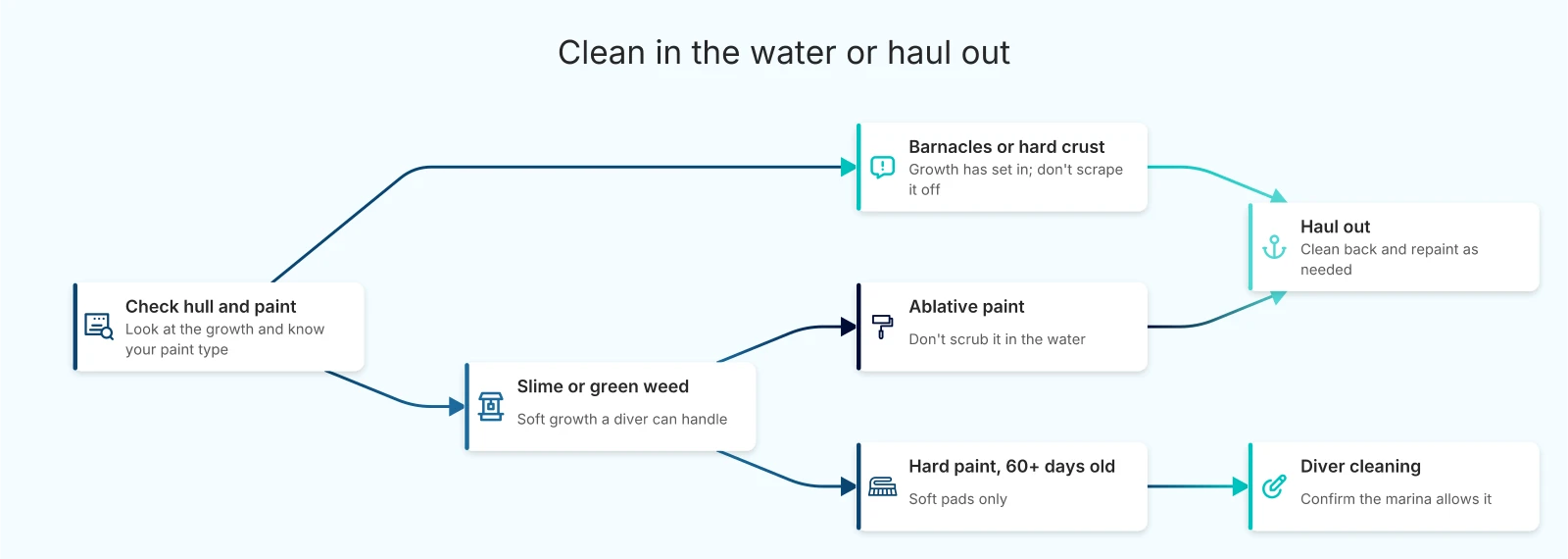
If the boat feels sluggish or burns more fuel, the first suspect is fouling on the bottom and running gear. Even a thin biofilm layer adds drag on hulls and propellers, so you don't need visible weed to lose performance. What you see tells you whether a diver can handle it or the boat needs to come out. For how your water and use set the schedule, see what sets your cleaning interval.
| What you see | What it means | What to do |
|---|---|---|
| Slime or a brown film | Biofilm, soft growth | Diver cleaning in the water |
| Grass or green weed | Light soft growth | Diver cleaning, ideally soon |
| Barnacles or hard crust | Growth has set in | Don't force it off, since scraping scars the surface. Haul out (see below) |
What does underwater hull cleaning involve?
A diver works over the whole hull with pads or soft tools. Growth hangs on where water barely moves, along the waterline, the strakes, the tab edges and the transom corners, so those spots get a pass every visit. Any patch skipped is where the next crop starts.
The diver also cleans the running gear: props, shafts, rudders and trim tabs. While down there, a diver can look over zincs (sacrificial anodes that corrode so your metal parts don't) and the intakes, and tell you what needs attention. Many divers also replace zincs on the same visit. You can compare hull-cleaning divers in Florida and check what each lists. Before booking, check on a profile such as Bottom Frenzy Hull Cleaning whether the diver lists zinc replacement and covers your marina.
Ablative vs hard bottom paint: how to clean each
Ablative paint is soft and wears away by design, so scrubbing it in the water sheds copper. Maryland's general marina permit specifically prohibits cleaning soft ablative paints in the water, and while that permit doesn't directly cover divers, the Clean Water Act bars releasing pollutants into surface water from any source.
Hard paint tolerates gentle cleaning, but wait at least 60 days after it is applied. A diver using soft pads on hard paint takes off the growth and barely touches the coating; heavy scrubbing sends paint and copper into the slip. Tell the diver which paint you have and confirm your marina allows in-water cleaning before the first visit.
For South Florida's warmer water, see how often a hull needs cleaning there.
When to haul out instead of cleaning in the water
Haul out when barnacles or hard growth have set in, when the paint is worn through, or when you're near the roughly 2-year repaint point that depends on how much the boat is used. Pulling the boat to reset the hull is scheduled maintenance, not a repair.
At the yard the hull is cleaned back and repainted as needed, and your cleaning interval starts over.
Getting quotes
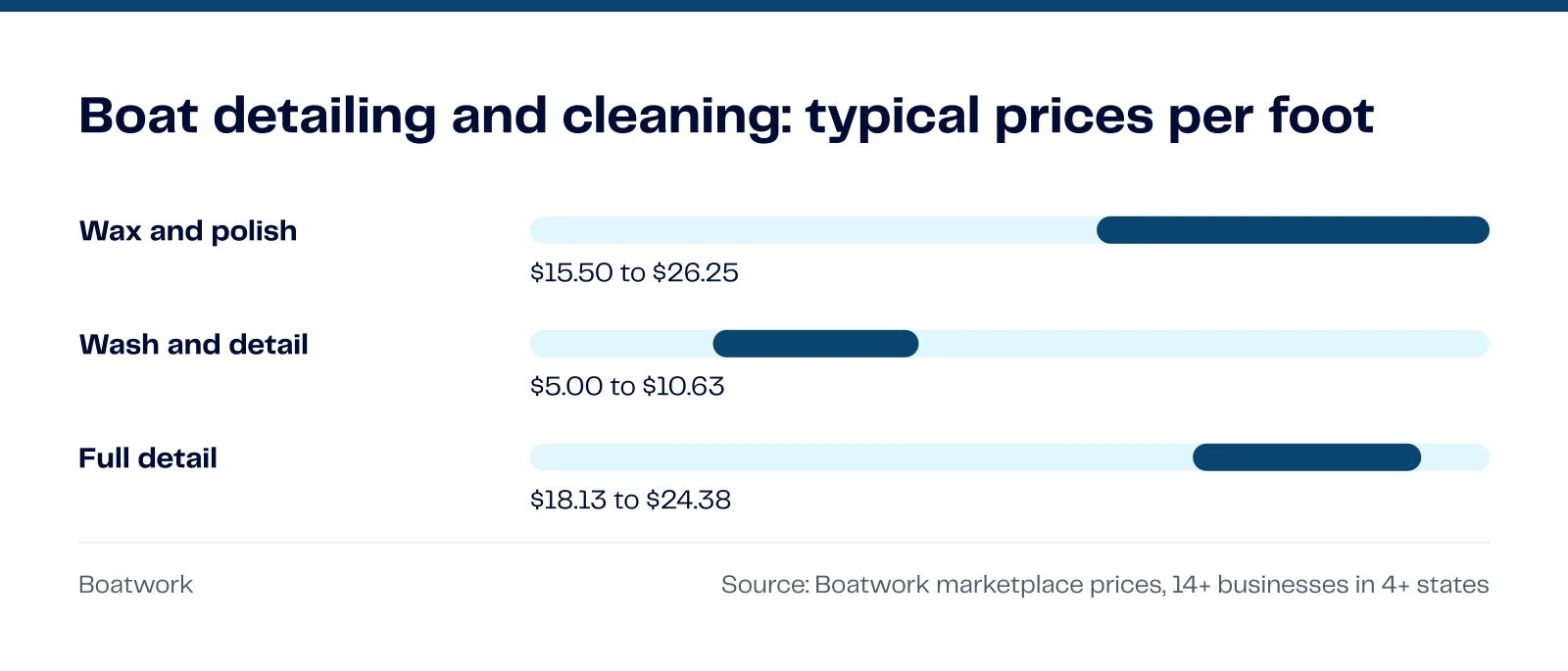
When you compare quotes, compare them on the same interval and the same scope: hull only, or running gear and zincs too. Boat length, how heavy the growth is when the diver arrives and how often you schedule all move the price, and our hull cleaning and bottom painting price guide gives the ranges. To line up a diver or a yard, describe the job on Boatwork and you get estimates only from the pros you choose.
Related pages and posts
- How Often to Clean a Boat Hull: What Sets Your Interval
- Florida Hull & Bottom Cleaning: Compare 158 Pros | Boatwork
- Bottom Frenzy Hull Cleaning: Hull & Bottom Cleaning
- How Often Does a Boat Hull Need Cleaning in South Florida?
- Hull Cleaning & Bottom Painting Costs: Prices Per Foot (2026)