What does a new bowrider cost?
As one current benchmark, Bayliner's VR6 Bowrider listing for the United States shows a starting price of $52,595. Treat that as one builder's base figure, not a class average. Expect the out-the-door total to run higher once options, freight, prep, tax and registration are added.
If you haven't settled on a boat type, the sales figures point to the obvious comparison. New powerboat sales in the United States totaled 156,754 units in 2025, and pontoons led with 33.6% of them, per the NMMA. Price a pontoon for the same crew alongside the bowrider before you commit.
Is the bigger hull worth the step up?
It can be, because at the starting price the longer boat can cost less per foot. A builder's series usually steps up in length, rated power and seating as the price climbs, so compare what each step buys.
To check the per-foot cost, divide each starting price by the length overall in feet. Convert the inches to a fraction of a foot first. If you're torn between two sizes, run the same division on the quotes in front of you before ruling out the bigger hull.
Size also changes what you tow. Bayliner's 2026 VR5 model carries a full 8 feet of beam and weighs approximately 3,342 lb with its standard engine. That weight matters when you size a tow vehicle, and the trailer, fuel and gear add to it.
Power package and price
The version you choose can move the price more than length does. Two versions in Bayliner's current VR Series for the United States share the VR6 name, the 22'7" length and the 10-person capacity.
The Bowrider and Outboard versions carry different maximum horsepower ratings and different starting prices. Ask the dealer which engine and drive each starting price includes.
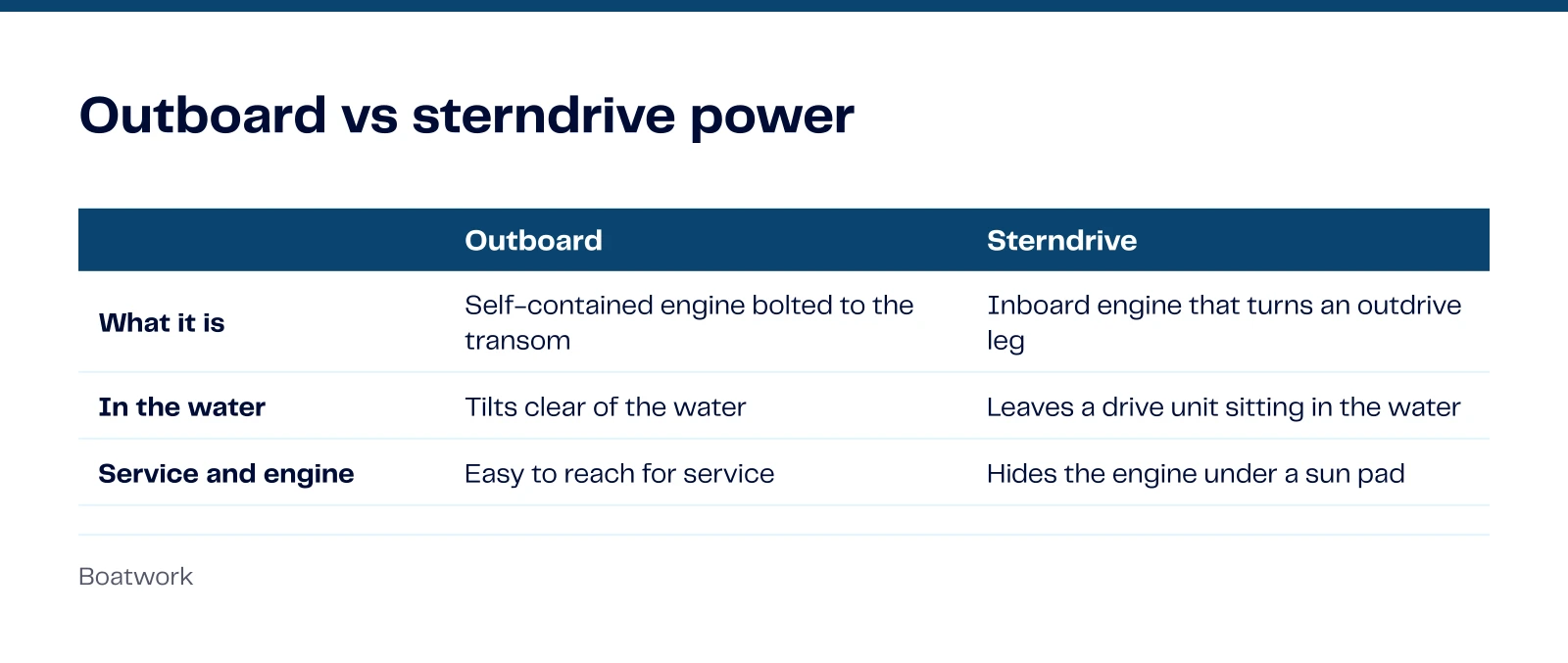
Drive type is a separate choice on some models. The VR5, for example, comes with either outboard or sterndrive power. An outboard is a self-contained engine bolted to the transom, the flat back of the boat. A sterndrive is an inboard engine that turns an outdrive leg through the transom.
The tradeoff is practical. An outboard tilts clear of the water and is easy to reach for service. A sterndrive hides the engine under a sun pad but leaves a drive unit sitting in the water. If the boat will sit at a slip in salt water, favor the outboard; if it lives on a trailer, either can work.
What does a "starting at" price leave out?
A starting price usually describes a base boat, so treat it as a floor. These items can add to it:
- A bigger engine, up to the maximum horsepower the boat is rated for.
- A trailer, if one isn't included.
- Option packages, such as a tow tower, a better stereo, snap-in flooring or a bimini top, the folding canvas shade.
Before you visit a dealer, list the upgrades you'd actually use and ask for each one priced separately. Ask which engine the starting price assumes, and what the step up to the maximum rated horsepower would cost.
Freight, dealer prep and paperwork fees
A dealer quote can add charges on top of the starting price. Ask for each of these as its own line on a written out-the-door quote:
- Freight, the cost of shipping the boat from the factory.
- Prep, also called commissioning, which covers rigging the boat and testing it so it's water-ready.
- A documentation fee for handling the paperwork.
An itemized quote lets you set two offers side by side, fee against fee. A single lump total hides which charge is doing the damage, and it leaves you nothing specific to negotiate.
Sales tax, title and registration
Plan for any sales tax your state charges on the purchase, plus fees to title and register the boat. Ask whether the trailer needs its own title and plate.
A trade-in can change the tax bill. Some states tax only the difference between the new boat's price and the trade-in allowance, while others tax the full price. Check your state revenue agency's current rules and fee schedule before you sign.
Ask the dealer whether they collect the tax and file the paperwork, or whether that falls to you. Then add the result to the itemized quote so you're comparing true totals.
Reading a monthly payment ad
A "payment as low as" figure tells you the cost per month and little else. The VR6 Bowrider's $52,595 starting price, for example, is advertised with a payment as low as $511.93 per month. A year of those payments comes to $511.93 × 12 = $6,143.16.
A payment like that depends on a loan term, an interest rate and a down payment. The headline number alone tells you none of them. Two ads with the same monthly figure can carry very different totals. Compare loans on the total paid over the full term, and use the payment as a cash-flow check.
Financing terms to get in writing
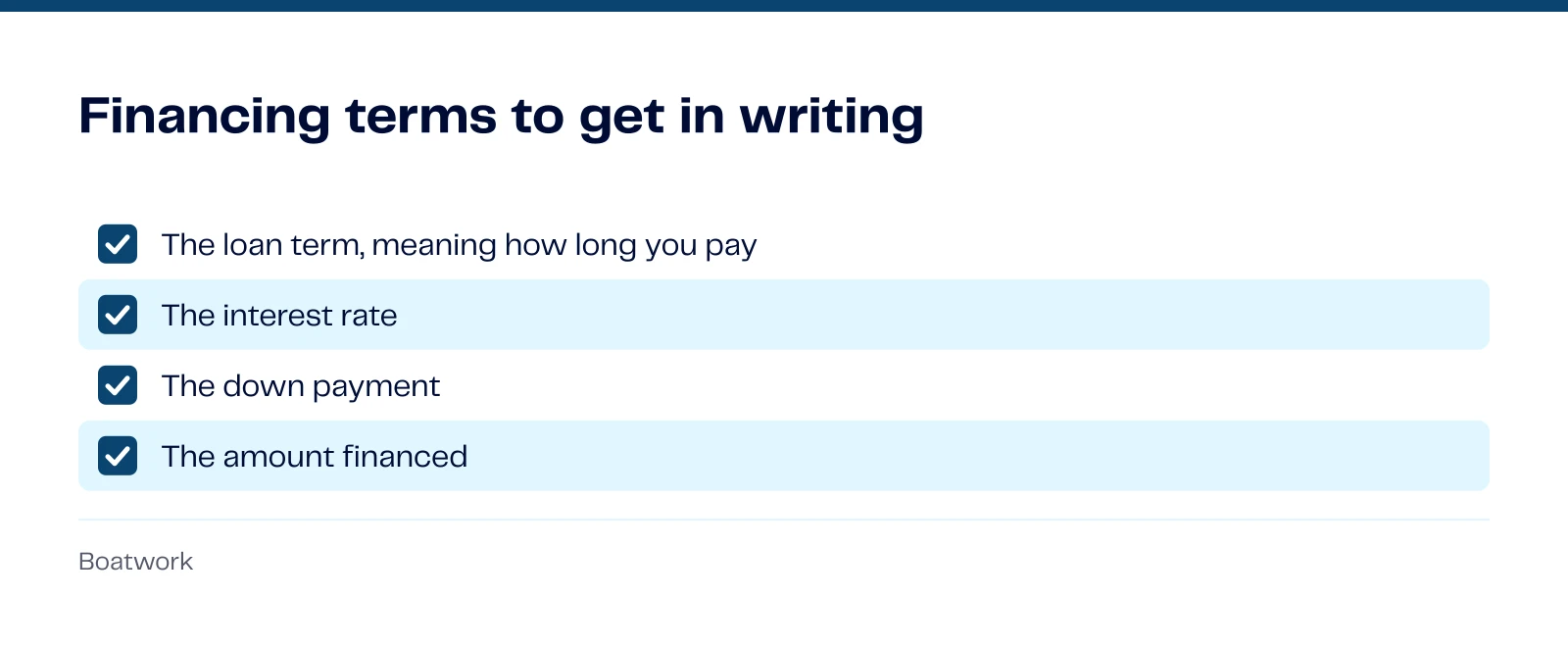
Get these terms in writing from every dealer or lender before you compare offers:
- The loan term, meaning how long you pay.
- The interest rate.
- The down payment.
- The amount financed.
Check that the amount financed treats fees and tax the same way on every quote. If one lender rolls them into the loan and another leaves them out, the second will look cheaper than it is.
A longer term lowers the payment but keeps the balance high while the boat loses value; see how fast wake boats depreciate for a related class of boat. Ask about prepayment penalties as well.
What does a bowrider cost to own each year?
Budget separately for insurance, storage, fuel and routine maintenance each year, because none of it is in the loan payment. Storage can mean a trailer in the driveway, a dry rack or a slip, depending on where you boat. Maintenance means engine service plus small parts like the impeller, the rubber-vaned wheel that pumps cooling water through the engine.
Engine type, region and hours run all move these costs, so plan them as a range. Our guide to how much a bowrider really costs to own explains ownership costs for bowriders. When service comes due, you can describe the job on Boatwork and compare estimates from the vetted marine pros you choose.